Monday, March 7, 2016

MARCH IS WOMEN'S HISTORY MONTH - SIMONE DE BEAUVOIR


    Simone de Beauvoir (1908-1986) was a brilliant thinker, writer, Existentialist, partner of Jean Paul Sartre, and more.  Generally I am confining my blogs to people from the U.S. but today's New York Times Book Review included a review of a book about the Existentialists.  Biography.com opens with
"French writer Simone de Beauvoir laid the foundation for the modern feminist movement. Also an existentialist philosopher, she had a romance with Jean-Paul Sartre."  While only a fairly primitive website such as biography.com would be able to juxtapose two such disparate thoughts, the fact is Simone de Beauvoir was as respected and nearly treated with equal regard as the men with whom she collaborated.

   From Britannica -   "Simone de Beauvoir, in full Simone Lucie-Ernestine-Marie-Bertrand de Beauvoir (born Jan. 9, 1908, Paris, France—died April 14, 1986, Paris), French writer and feminist, a member of the intellectual fellowship of philosopher-writers who have given a literary transcription to the themes ofExistentialism. She is known primarily for her treatise Le Deuxième Sexe,2 vol. (1949; The Second Sex), a scholarly and passionate plea for the abolition of what she called the myth of the “eternal feminine.” This seminal work became a classic of feminist literature."


   "Schooled in private institutions, de Beauvoir attended the Sorbonne, where, in 1929, she passed her agrégation in philosophy and met Jean-Paul Sartre, beginning a lifelong association with him. She taught at a number of schools (1931–43) before turning to writing for her livelihood. In 1945 she and Sartre founded and began editing Le Temps modernes, a monthly review."


   "Her novels expound the major Existential themes, demonstrating her conception of the writer’s commitment to the times. L’Invitée (1943; She Came To Stay) describes the subtle destruction of a couple’s relationship brought about by a young girl’s prolonged stay in their home; it also treats the difficult problem of the relationship of a conscience to “the other,” each individual conscience being fundamentally a predator to another. Of her other works of fiction, perhaps the best known is Les Mandarins (1954; The Mandarins), for which she won the Prix Goncourt. It is a chronicle of the attempts of post-World War II intellectuals to leave their “mandarin” (educated elite) status and engage in political activism. She also wrote four books of philosophy, including Pour une Morale de l’ambiguité (1947; The Ethics of Ambiguity); travel books on China (La Longue Marche: essai sur la Chine [1957]; The Long March) and the United States (L’Amérique au jour de jour [1948]; America Day by Day); and a number of essays, some of them book-length, the best known of which is The Second Sex. In 2009 a new English-language translation of The Second Sex was published, making the entire original text available to English-speaking readers for the first time; the earlier translation (1953) had been severely edited."


“On the day when it will be possible for woman to love not in her weakness but in her strength, not to escape herself but to find herself, not to abase herself but to assert herself--on that day love will become for her, as for man, a source of life and not of mortal danger.”
― Simone de Beauvoir

   "Several volumes of her work are devoted to autobiography. These include Mémoires d’une jeune fille rangée (1958; Memoirs of a Dutiful Daughter), La Force de l’âge (1960; The Prime of Life), La Force des choses (1963; Force of Circumstance), and Tout compte fait (1972; All Said and Done). This body of work, beyond its personal interest, constitutes a clear and telling portrait of French intellectual life from the 1930s to the 1970s.

   "In addition to treating feminist issues, de Beauvoir was concerned with the issue of aging, which she addressed in Une Mort très douce (1964; A Very Easy Death), on her mother’s death in a hospital, and in La Vieillesse (1970; Old Age), a bitter reflection on society’s indifference to the elderly. In 1981 she wrote La Cérémonie des adieux (Adieux: A Farewell to Sartre), a painful account of Sartre’s last years. Simone de Beauvoir: A Biography, by Deirdre Bair, appeared in 1990. Carole Seymour-Jones’s A Dangerous Liaison(2008), a double biography of de Beauvoir and Sartre, explores the unorthodox long-term relationship between the two.

   "Simone de Beauvoir revealed herself as a woman of formidable courage and integrity, whose life supported her thesis: the basic options of an individual must be made on the premises of an equal vocation for man and woman founded on a common structure of their being, independent of their sexuality."


Resources:
Internet Encyclopedia of Philosophy.   http://www.iep.utm.edu/beauvoir/ 
Biography.com - http://www.biography.com/people/simone-de-beauvoir-9269063
Existential Primer - http://www.tameri.com/csw/exist/beauvoir.shtml  
Stanford Encyclopedia of Philosophy - http://plato.stanford.edu/entries/beauvoir/ 
Encyclopedia Britannica - http://www.britannica.com/biography/Simone-de-Beauvoir  
Goodreads - quotes - https://www.goodreads.com/author/quotes/5548.Simone_de_Beauvoir 
NY Times book review - http://www.nytimes.com/2016/03/03/books/review-in-sarah-bakewells-at-the-existentialist-cafe-nothingness-has-a-certain-something.html?_r=0 
Wikipedia entry on Simone De Beauvoir  - https://en.wikipedia.org/wiki/Simone_de_Beauvoir  


List of publications (non-exhaustive)[edit]  Wikipedia:

L'Invitée (1943) (English – She Came to Stay) [novel]
Pyrrhus et Cinéas (1944) [nonfiction]
Le Sang des autres (1945) (English – The Blood of Others) [novel]
Who Shall Die? (1945)
Tous les hommes sont mortels (1946) (English – All Men Are Mortal) [novel]
Pour une morale de l'ambiguïté (1947) (English – The Ethics of Ambiguity) [nonfiction]
Le Deuxième Sexe (1949) (English – The Second Sex) [nonfiction]
L'Amérique au jour le jour (1954) (English – America Day by Day)
Les Mandarins (1954) (English - The Mandarins) [novel]
Must We Burn Sade? (1955)
The Long March (1957) [nonfiction]
Memoirs of a Dutiful Daughter (1958)
The Prime of Life (1960)
Force of Circumstance (1963)
A Very Easy Death (1964)
Les Belles Images (1966) [novel]
The Woman Destroyed (1967) [novel]
The Coming of Age (1970) [nonfiction]
All Said and Done (1972)
When Things of the Spirit Come First (1979) [novel]
Adieux: A Farewell to Sartre (1981)
Letters to Sartre (1990)
Journal de guerre, Sept 1939–Jan 1941 (1990); English - Wartime Diary (2009)
A Transatlantic Love Affair: Letters to Nelson Algren (1998)
Diary of a Philosophy Student, 1926–27 (2006)
Cahiers de jeunesse, 1926–1930 (2008)

Saturday, March 5, 2016

MARCH IS WOMEN'S HISTORY MONTH - BUFFY ST. MARIE


   Do you know very much about the indigenous people of the Americas?  Did you grow up knowing any of the names of the various peoples all over the U.S.?  Did you ever take the role of "Indian" when you were playing 'cowboys and indians' as a kid?   I grew up in Hollywood for the most part, on a street entirely of boys.  So I played such games. My mother, who was part Cherokee, always made us proud of our heritage.  So I was of course the "Indian".  I knew some history. I knew how horrible we were to indigenous people (though not the extent of it).  But I didn't really understand until I heard BUFFY ST. MARIE sing - "MY COUNTRY TIS OF THY PEOPLE YOU'RE DYING".
   Buffy St. Marie is a singer, songwriter, visual artist, teacher, scientist, civil rights activist, general political activist, vegetarian, Academy Award winner, children's book writer, supporter for the freedom of Leonard Peltier, and so much more.    

   So far there is not much factual information written about Buffy St. Marie except on her own website.  Perhaps that is because she is still alive and still contributing to the political and music scenes of the day!   She was a very popular singer in the early 1960s - coming out with a first album in 1964.  But as her music became more and more critical of the Vietnam War, she was more and more marginalized by the chicken-sXXt mainstream media.  [See below ROLE OF FBI]
   Here's a bit of factual info:  "A member of the Cree Indian tribe, Sainte-Marie was born on a reservation in Qu'Appelle Valley, Saskatchewan, Canada. The year of her birth has been variously given as 1941 and 1942. Orphaned as a baby, she was adopted by a Massachusetts family named Sainte-Marie that was partially of Mi'kmaq Native American descent. As a child, though, Sainte-Marie knew little of her own Native background, and her rediscovery of that background later on became an important stimulus for her creative activity. Given the name Beverly Sainte-Marie and nicknamed Buffy, she was later ceremonially adopted by a Cree family related to one of her birth parents. Sainte-Marie lived for much of her life in the United States, becoming a dual U.S. and Canadian citizen, but she told an Ottawa Citizen interviewer in 1993 that she would always identify herself as Canadian."

   "Sainte-Marie had some piano lessons as a child and also enjoyed writing poetry. She learned the guitar in her teens, and during family vacations in Maine she began writing songs. The timing was good, for when Sainte-Marie began attending the University of Massachusetts at Amherst, coffeehouses with live folk music entertainment were beginning to flower across New England. Sainte-Marie was a coffeehouse favorite as a college student, but she did not neglect her studies, either; she graduated in 1962 with a degree in Eastern philosophy and was recognized as one of the top ten students in her class. She later received a fine arts Ph.D. from the same institution."


   From the interview in The Guardian -  Why were they so interested in you?

   "I started out in the Kennedy years, but it changed as soon as Lyndon Johnson came in, and Richard Nixon. Neither one wanted a cute young singer with a big mouth all over television talking about the Vietnam war and about Native American issues. So when Until It’s Time for You to Go was a big hit, and I was all over The Tonight Show, and had magazine coverage, that’s when they blew the whistle. And of course, with Nixon [the issue] was with the American Indian movement – and when they were trying to steal the reservation lands that contained uranium."

   [A bit more about this:  "In 1999, ex-CIA agent Charles Schlund III went public with the information about the government’s Vietnam-era radio blacklists “to suppress rock music because of its role in the Vietnam War.” It was also around this time that Sainte-Marie learned that the government had tapped her phone and that the FBI had accrued a 31-page file on her. Stonechild scrupulously pieces together the facts of this injustice, and it's sure to stir up some fresh countercultural rage in every Sainte-Marie fan who comes across a copy of It's My Way. But is it too little too late; is his book preaching to an unfortunately small choir? As she muses in the 2006 documentary "Buffy Sainte-Marie: A Multimedia Life, “They only have to hold you underwater for about four minutes and you’re dead for a long time, when it comes to radio airplay.”]


You were a regular on Sesame Street for five years in the late 1970s. It was quite a radical show, wasn’t it?
"I’ll never forget our first show – I took them to a [Native American] reservation in Taos Pueblo, New Mexico. So Big Bird and me and a bunch of little Indian kids – all five, six, seven years old – were riding around in the back of a pickup truck. And Big Bird is all wiggly and antsy and he’s saying: “Buffy! I’m kind of nervous. I’ve heard there were Indians round here.” And all the little kids popped up and said: “I’m an Indian... I’m Navajo... I’m Hopi... I’m from the Pueblo.” They [theSesame Street team] had such a natural way of identifying with the average five-year-old. It was always a pleasure to work with them; they never stereotyped me and I wrote a lot of my own bits."


Didn’t you once breastfeed your son on the show?
"It’s on YouTube. I think I was the first person to nurse a baby on major television. I mean, think of the impact: it was three shows a day in 72 countries. So Big Bird looks out over his nest and he says: “What you doing, Buffy?” And I say: “I’m feeding the baby.” And he says: “That’s a funny way to feed a baby.” [Laughs] Like a kid would, right? And I say: “Yeah, not all mothers feed their babies that way, but he gets everything that he needs and I get to cuddle him.” And then Big Bird says: “Oh, that’s nice” and he goes back to playing, like a real kid would."

   There is so much more to this multi-faceted, talented, beautiful, courageous, and strong woman. I hope you will check out some of the links below to learn more.  One thing is certain - there is not enough attention paid to this incredible woman.  She is still most likely marginalized because of the gross racism and genocide perpetrated on her people.  She is also a woman which doesn't help.  Only one biography has been written about her - "indigenous studies professor and Saskatchewan Book Award winner Blair Stonechild published the first Buffy Sainte-Marie biography, It’s My Way."She is still on tour - go to her website to see the schedule. Perhaps you can catch her powerful singing in person!


[Buffy St. Marie embraced computers and technology, even incorporating it into her art.]


CHECK OUT THESE LINKS:

Official website - http://buffysainte-marie.com
Facebook - https://www.facebook.com/BuffySainteMarie/
NPR Review of latest album - http://www.npr.org/2015/05/03/403277165/first-listen-buffy-sainte-marie-power-in-the-blood
Buffy St. Marie's Education Project - http://www.cradleboard.org
Encyclopedia.com - http://www.encyclopedia.com/topic/Buffy_Sainte-Marie.aspx
Interview with the Guardian - http://www.theguardian.com/music/2015/aug/02/buffy-sainte-marie-tour-sesame-street-morrissey-interview
Los Angeles Review of Books Bio. Essay - https://lareviewofbooks.org/review/illuminations-a-biography-of-buffy-sainte-marie 
On Democracy Now -- 50 years!   - http://www.democracynow.org/2015/5/22/legendary_native_american_singer_songwriter_buffy 
Encyclopedia Britannica - http://www.britannica.com/biography/Buffy-Sainte-Marie 
It's My Way by Blair Stonechild  - the first biography ever!
Winning the Polaris Prize 2015 - http://www.vice.com/read/buffy-sainte-marie-on-winning-the-polaris-prize-viet-cong-and-indigenous-activism 

Friday, March 4, 2016

MARCH IS WOMEN'S HISTORY MONTH - CORETTA SCOTT KING


   "Coretta Scott was born on 27 April 1927, near Marion, Alabama. Her parents, Obadiah ‘‘Obie’’ Scott and Bernice McMurray Scott, were farm owners committed to ensuring that their children received the best education possible. Scott attended the private Lincoln High School in Marion, where she developed her interest in music. There she took formal vocal lessons, learned to read music, and played several instruments. By the age of 15, she had become the choir director and pianist of her church’s junior choir.

   "After graduating from Lincoln, Scott won a partial scholarship to Antioch College, in Yellow Springs, Ohio, the same university her sister Edythe had attended as the first African American student. While at Antioch, Scott studied voice and music education. She also became a member of the local chapter of the National Association for the Advancement of Colored People, as well as the Race Relations and Civil Liberties Committees. In an article, ‘‘Why I Came to College,’’ published in Opportunity in 1948, Scott wrote that college graduates, ‘‘had greater freedom of movement: they went on trips; they visited cities; they knew more about the world’’ (Scott, 42). She later credited Antioch with preparing her for her role in the civil rights movement, stating that ‘‘the college’s emphasis on service to mankind reinforced the Christian spirit of giving and sharing’’ and provided ‘‘a new self-assurance that encouraged me in competition with all people’’ (Scott King, 43).


   "In 1951, Scott enrolled in Boston’s New England Conservatory of Music with a grant from the Jessie Smith Noyes Foundation. In early 1952, her friend Mary Powell introduced her to King, then a doctoral candidate at Boston University’s School of Theology. While initially wary of dating a Baptist minister, she was impressed by his sophistication and intellect and recalled King telling her: ‘‘You have everything I have ever wanted in a wife’’ (Scott King, 53). The two were married at the Scott family home near Marion on 18 June 1953. After the wedding, they returned to Boston to complete their degrees. Coretta Scott King earned her bachelor of music degree in June 1954.

   "Although Scott King was focused on raising the couple’s four children: Yolanda Denise King (1955), Martin Luther King, III (1957), Dexter Scott King (1961), and Bernice Albertine King (1963), she continued to play a critical role in many of the civil rights campaigns of the 1950s and 1960s, performing in freedom concerts that included poetry recitation, singing, and lectures related to the history of the civil rights movement. The proceeds from these concerts were donated to the Southern Christian Leadership Conference.


   "Scott King also accompanied her husband around the world, traveling to Ghana in 1957 and India in 1959. She was particularly affected by the women she met in India. ‘‘As we traveled through the land, we were greatly impressed by the part women played in the political life of India, far more than in our own country’’ (Scott King, 162). In 1962, Coretta Scott King’s interest in disarmament efforts took her to Geneva, Switzerland, where she served as a Women’s Strike for Peace delegate to the 17-nation Disarmament Conference. Two years later, she accompanied her husband to Oslo for the awarding of the Nobel Peace Prize. She later recalled thinking: ‘‘What a blessing, to be a co-worker with a man whose life would have so profound an impact on the world’’ (Scott King, 12).

   "After King’s assassination on 4 April 1968, Coretta Scott King devoted much of her life to spreading her husband’s philosophy of nonviolence. Just days after his death, she led a march on behalf of sanitation workers in Memphis, Tennessee. Later that month, she stood in for her husband at an anti–Vietnam War rally in New York. In May 1968, she helped to launch the Poor People’s Campaign, and thereafter participated in numerous anti-poverty efforts."


   "With a deep commitment to preserving King’s legacy, almost immediately Coretta Scott King began mobilizing support for the Martin Luther King, Jr. Center for Nonviolent Social Change. As founding president of the King Center, she guided its construction next to Ebenezer Baptist Church, where King had served as co-pastor with his father, Martin Luther King, Sr.

   "Throughout the 1970s and 1980s, Scott King continued to speak publicly and write nationally syndicated columns, and began efforts to establish a national holiday in honor of her husband. In 1983, she led an effort that brought more than a half-million demonstrators to Washington, D.C., to commemorate the 20th anniversary of the 1963 March on Washington for Jobs and Freedom, where King had delivered his famous ‘‘I Have a Dream’’ speech. As chairperson of the Martin Luther King, Jr. Federal Holiday Commission, she successfully formalized plans for the annual celebration of Martin Luther King, Jr. Day, which began in January 1986."


   "During the 1980’s, Coretta Scott King reaffirmed her long-standing opposition to South African apartheid, participating in a series of sit-in protests in Washington that prompted nationwide demonstrations against South African racial policies. In 1986, she traveled to South Africa and met with Winnie Mandela. She also remained active in various women’s organizations, including the National Organization for Women, the Women’s International League for Peace and Freedom, and United Church Women."

   "Throughout her life, Coretta Scott King carried the message of nonviolence and social justice to almost every corner of the globe. On 30 January 2006, Coretta Scott King died in her sleep at a holistic health center in Rosarito Beach, Mexico. She was 78 years old. "


Martin Luther King Jr. ... - http://kingencyclopedia.stanford.edu/encyclopedia/encyclopedia/enc_king_coretta_scott_1927_2006/
About Mrs. King - http://www.thekingcenter.org/about-mrs-king 
www.history.com -- http://www.history.com/topics/coretta-scott-king 
biography.com -- http://www.biography.com/people/coretta-scott-king-9542067#synopsis 
The King Center - http://www.thekingcenter.org/about-mrs-king 

SOURCES   At King Encyclopedia Stanford University - see link above

Introduction in Papers 2:12–14, 19.

King, Stride Toward Freedom, 1958.

(Scott) King, My Life with Martin Luther King, Jr., 1969.

Scott, ‘‘Why I Came to College,’’ Opportunity 26 (1948): 42, 70.

MARCH IS WOMEN'S HISTORY MONTH - ELIZABETH GURLEY FLYNN AND THE I.W.W.


Known as the Rebel Girl      
   As a young woman growing up in the 50's and 60's did I have a role model for my life?  Did I see myself a hero of the day as so many of my parents' friends seemed to me? labor leaders and peace workers, civil rights leaders, social workers, and more?  At first I wanted to be a social worker as I had no idea what their true role was in a capitalist society.  And then I read about Elizabeth Gurley Flynn, the brave I.W.W. leader of many strikes and struggles for the rights of working people.


Taken in its entirety from The Socialist Worker biography:    

"FOR PEACE and socialism is in the hearts, in the minds, on the lips of millions around the world...The 'sun of tomorrow' shines upon us. The future is ours."

So said one of the giants of American radicalism, Elizabeth Gurley Flynn, in a May Day speech in 1941. Flynn dedicated her life to the struggles of the working class through its highest and lowest points. She breathed class struggle and spoke of revolution for nearly 60 years, and her legacy is worthy of the highest admiration.

Born to poor Irish immigrants in 1890 in New Hampshire, she could claim proudly, "There had been an uprising in each generation in Ireland [against British rule], and forefathers of mine were reputed to be in every one of them."

Her father, Thomas Flynn, educated her and her siblings in the meaning of her Irish heritage and the politics of liberation. "When one understood British imperialism, it was an open window to all imperialism," wrote Flynn. "As children, we came to hate unjust wars, which took the land and rights away from other peoples."

Now living in the South Bronx, her father drifted to socialist politics and brought young Elizabeth with him. Recounting what her father taught her, Elizabeth said, "Scientific socialism made clear that it was not a poor man's fault if he is out of work...and you were not a 'failure' because you did not climb to riches on the backs of your fellow man."

Thomas Flynn--who ran for the New York State Assembly on the Socialist ticket in 1918--later became overbearing and eventually jealous of his daughter's popularity in the labor movement. But looking back, Elizabeth still felt that "[o]ur father's methods were not entirely correct, but his purpose was clear, not to allow his children to be 'educated' against the interests of the working class."

- - - - - - - - - - - - - - - -

FLYNN WOULD begin to develop politically on her own, devouring socialist novels like Edward Bellamy's Looking Backward and William Morris' News From Nowhere, along with the works of Peter Kropotkin and August Bebel. It was the latter's book Woman Under Socialism that she used as a basis for her first public speech and lecture on "What Socialism Will Do For Women," which she gave at age 15.    [People's World says: At 16, she gave her first speech, "What Socialism Will Do for Women." For her political activities, Flynn was expelled from high school."]


A lifelong advocate for birth control access and a fighter for women's rights, she said looking back on those times, writing in her autobiography Rebel Girl:

     "Fathers and husbands collected women's wages, sometimes right at the company door. Women did not have a legal right to their own earnings...Equal opportunity, equal pay and the right to be organized were the crying needs of women wage-earner then and unfortunately still now."
This teenage agitator become a hit among working men and women, and a target for sexist ire from the snobbish New York Times, which commented after her first of many arrests in 1906, "Miss Flynn, who will graduate school in two years and whose shoe tops...show below her skirts [i.e., she dressed immodestly], tells us what to think, which is just what she thinks."

A Broadway producer wanted to offer her a career as an actress due to her clear oratory talents, which she refused, saying, "I don't want to be an actress! I want to speak my own words."

Flynn began to speak across the country on behalf of the Socialist Party and the Industrial Workers of the World (IWW, often referred to as the "Wobblies"). She joined the IWW's Mixed Local No. 179 in 1906, a year after the IWW's founding.

During her long train trips to labor struggles and speaking engagements, she said she "fell in love with [this] country, its rivers, prairies, forests, mountains...I felt then, as I do now, it's a rich and fertile land, capable of satisfying all the needs of its people. It could be a paradise on earth if it belonged to the people, not to a small owning class."

Now, as a "professional revolutionist" with the IWW, she became a close collaborator with socialist Eugene Debs and IWW leaders Vincent St. John, Mother Jones and Joe Hill, the rebel songwriter. Flynn became a close friend of legendary Irish socialist James Connolly, who would be executed by the British in 1916 for his part in leading the Dublin Easter Rising against imperial rule, and helped him organize the Irish Socialist Federation.

One of her most important political relationships was with IWW leader and organizer William "Big Bill" Haywood. Flynn recalled some years later how Bill said in a speech, "'I'm a two-gun man from the West, you know.' And while the audience waited breathlessly, he pulled his union card from one pocket and his Socialist card from the other."

Though the two would have a major political falling out some years later over the direction of the IWW, Flynn and Haywood worked closely together in a number of the IWW's most historic struggles.

They worked together organizing agricultural workers in the West and lumber workers in the Pacific Northwest, and at countless freedom of speech fights all over the country. They were part of the 1913 silk strike in Paterson, N.J.; massive textile strikes in Lowell and New Bedford, Mass., and the great "Bread and Roses" strike of 1912 in Lawrence, Mass.

Flynn was arrested for one trumped-up charge or another at just about all of these occasions. Her son Fred boasted many years later that he had been arrested twice, once in Missoula and a second time in Spokane--before he was even born.

During the Lawrence "Bread and Roses" strike, Flynn and Haywood worked hard to educate the mostly immigrant textile workers of, as Flynn put it:


      "their power, as workers, as the producers of all wealth, as the creators of profit. We talked of "solidarity," a beautiful word in all languages. We said firmly, "You work together for the boss. You can stand together to fight for yourselves!" We ridiculed the police and militia. "Can they weave cloth with soldiers' bayonets or policemen's club?"

- - - - - - - - - - - - - - - -

THIS WAS the Wobblies' great strength--the ability to relate and speak to people on their own terms, to point out to workers what they already knew in their guts, that the whole system is stacked against them and the only chance they've got is to band together, into "One Big Union."

These were the high points of the early IWW, but they didn't last. While the key to the IWW's success was organizing among the unskilled workers who the American Federation of Labor refused to organize, some of their own policies diminished their ability to hold the group together.

For instance, the IWW refused to sign contracts over wages, benefits and working conditions because this, IWW leaders believed, represented a compromise with the bosses. Without contracts, the IWW failed to consolidate many of the gains it made during the brave workers' struggles it led. In many cases, when IWW organizers left town, the local organizations fell apart.

The IWW also argued that the key to transforming society was organizing the majority of workers into "One Big Union," which would be the framework for a new socialist society. The final blow to capitalism would come through a mass general strike that would paralyze the economy and force the bosses to give industry over to the working class. As a result, the IWW didn't participate in politics--leaving this important arena of struggle to the Socialist Party, which was dominated by a conservative wing.

Reflecting many years later, Flynn said that "possibly a permanent industrial union movement could have been built a quarter century earlier than the CIO. But our incurable 'infantile leftism' blinded us." By the beginning of the First World War, the IWW had been weakened by splits, factionalism and an unwillingness to tackle explicitly political issues.

And this was just before its greatest challenge. With the entry of the U.S. into the First World War, a wave of government-backed mob violence spread across the country. Pacifists, certain Christian sects, German immigrants, socialists and especially Wobblies were attacked, brutalized, tarred and feathered, and sometimes lynched.

During the Red Scare, socialists and communists, anarchists, Wobblies, unionists and other radicals were attacked, their halls ransacked and their members arrested. Many were rounded up in the Palmer Raids, named after Attorney General A. Mitchell Palmer, and deported under the auspices of the Espionage and Sedition Acts.

Elizabeth Gurley Flynn took it upon herself at this time to struggle for the freedom all of these "class war prisoners." She said, "We planned to work for the release of all [labor] and political prisoners...the imprisoned comrades, of whatever persuasions, were a bond of unity."
She became a founding member of the American Civil Liberties Union (ACLU) and a principal activist within the International Labor Defense (ILD), which formed in 1925.

"One of our first undertakings was to publicize the facts of each case," explained Flynn. "We organized outside correspondents to write to the prisoners. Through these channels, we soon became very familiar with the conditions inside the gray, forbidding walls of federal penitentiaries."

Flynn helped win the release of those who participated in the Green Corn Rebellion, a revolt of poor Oklahoma farmers against the draft, fought for the freedom of many imprisoned Wobblies and antiwar activists, and was heavily involved in the campaign to save Italian anarchists Sacco and Vanzetti from execution.

- - - - - - - - - - - - - - - -

HER POLITICAL activities in the 1920s were cut short by illness, and she spent the better part of a decade ill and inactive. When she finally re-entered her lifelong work as a revolutionist, it was to join the Communist Party (CP)--an organization she had already moved close to through her work with the ILD.

Flynn joined the Communist Party in 1936, was elected to the national committee two years later and became national chairperson in 1961. [She was the first woman to hold the post, and she retained it until her death. A suit carried to the Supreme Court (Aptheker v. Secretary of State), challenging the constitutionality of a provision of the 1950 Subversive Activities Control Act that denied the issuance of passports to communists, was won in 1964, and she promptly secured a passport in order to visit the Soviet Union. When she died that year, she was given a state funeral in Red Square.]

By this point, the U.S. Communist Party, like all those around the world, had become a creature of the new ruling bureaucracy in Russia, led by Joseph Stalin, and so it followed the dictates from Russia, even when this meant opposing struggle.

Flynn followed the CP line through its many appalling twists and turns, including the Stalin-Hitler Pact, and then support for the Second World War, revelations by Khrushchev of the extent of Stalin's murderous crimes, and the Russian suppression of the Hungarian Revolution of 1956.

But this period in her life shouldn't overshadow Flynn's record of militancy and courage in the cause of the labor movement, for which she faced police violence and was thrown in jail countless times for her beliefs and even served two years behind bars in the late 1950s as a victim of McCarthyism.

In a world of "great men" she was a proud, working-class, Irish woman who stood with her shoulders square and spoke with an impassioned voice that was eloquent, yet relatable; inspiring, but not condescending; and militant to the core." 

    "When Elizabeth Gurley Flynn went to see the great IWW songwriter Joe Hill in Salt Lake City while he was awaiting execution for a crime he didn't commit, Joe dedicated a song to Flynn called "The Rebel Girl":


"Yes, her hands may be harden'd from labor
And her dress may not be very fine;
But a heart in her bosom is beating
That is true to her class and her kind.
And the grafters in terror are trembling
When her spite and defiance she'll hurl.
For the only and thoroughbred lady
Is the Rebel Girl."

"And this is exactly how Elizabeth Gurley Flynn deserves to be remembered."  Flynn died September 5, 1964 in Moscow, Russia.


SABOTAGE by Elizabeth Gurley Flynn - http://www.iww.org/history/library/Flynn/Sabotage 
About Education Biography - http://womenshistory.about.com/od/elizabethgurleyflynn/a/rebel_girl.htm 
Statement at the Smith Act Trial - http://www.americanrhetoric.com/speeches/elizabethgurleyflynn.htm 
Socialist Worker Party history - http://socialistworker.org/2012/08/07/the-story-of-the-rebel-girl 
Britannica Bio - http://www.britannica.com/biography/Elizabeth-Gurley-Flynn 
The People's World - http://www.peoplesworld.org/women-s-history-elizabeth-gurley-flynn-the-rebel-girl/ 
Biography, Your Dictionary - http://biography.yourdictionary.com/elizabeth-gurley-flynn 

Additional Reading Sources:

Flynn published two books about her life: 
The Rebel Girl, An Autobiography: My First Life (1906-1926; revised edition, 1973) and 
The Alderson Story: My Life as a Political Prisoner (1955). 
A summary of Flynn's IWW and labor defense activities can be found in Rosalyn Fraad Baxandall, "Elizabeth Gurley Flynn: The Early Years," in Radical America (January-February 1975). 
The following books provide discussions of Flynn in the context of women activists and labor radicals: 
Melvyn Dubofsky, We Shall Be All: A History of the Industrial Workers of the World (1969); Meredith Tax, The Rising of the Women: Feminist Solidarity and Class Conflict, 1880-1917 (1980); and June Sochen, Movers and Shakers: American Women Thinkers and Activists, 1900-1970 (1973).
Additional Biography Sources

Camp, Helen C., Iron in her soul: Elizabeth Gurley Flynn and the American Left, Pullman, Wash.: WSU Press, 1995.

Read more at http://biography.yourdictionary.com/elizabeth-gurley-flynn#MhRZJJKu5jWhWySp.99

Wednesday, March 2, 2016

MARCH IS WOMEN'S HISTORY MONTH - JEANNETTE RANKIN


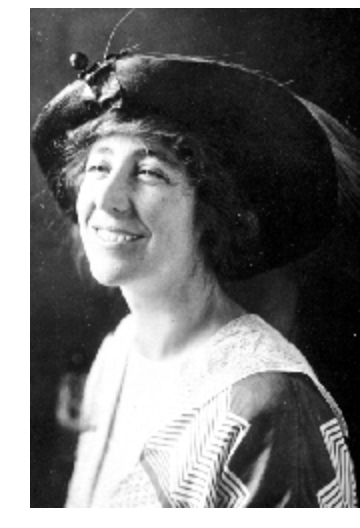
   Jeannette Rankin was the first woman to achieve a high government position when she was elected to Congress from the state of Montana in 1916.  Perhaps her greatest distinction was to be the only member of congress to vote against entry into either World War I or World War II.  She was practically attacked for the second vote and had to be escorted out by the police.

"I cannot vote for war."


    "Condemnation of her stand was immediate and intense, forcing Rankin briefly to huddle in a phone booth before receiving a police escort to her office.38 “I voted my convictions and redeemed my campaign pledges,” she told her constituents.39 “Montana is 100 percent against you,” wired her brother Wellington.40 In private, she told friends “I have nothing left but my integrity.”41 The vote essentially made the rest of Rankin’s term irrelevant. Having made her point, she only voted “present” when the House declared war on Germany and Italy.   She found that her colleagues and the press simply ignored her. She chose not to run for re-election in 1942, and her district replaced the isolationist Republican with an internationalist Democrat who had served in three branches of the military, Mike Mansfield.
   "Rankin continued to divide her time between Montana and Georgia in the years after she left Congress. India became one of her favorite excursions; she was drawn by the nonviolent protest tactics of Mohandas K. Gandhi. During the Vietnam War, she led the Jeannette Rankin Brigade, numbering 5,000, in a protest march on Wash­ington in January 1968 that culminated in the presentation of a peace petition to House Speaker John McCormack of Massachusetts. Her 90th birthday in 1970 was celebrated in the Rayburn House Office Building with a reception and dinner. At the time of her death, on May 18, 1973, in Carmel, California, Rankin was considering another run for a House seat to protest the Vietnam War."


   Being for peace in the United States generally has meant that one is a communist. Here's more of Rankin's history:
   "From her base in Georgia, Jeannette Rankin became Field Secretary of the WILPF and lobbied for peace. When she left the WILPF she formed the Georgia Peace Society. She lobbied for the Women's Peace Union, working for an antiwar constitutional amendment. She left the Peace Union, and began working with the National Council for the Prevention of War. She also lobbied for American cooperation with the World Court and for labor reforms and an end to child labor, including working for passage of theSheppard-Towner Act of 1921, a bill she had originally introduced into Congress. Her work for a constitutional amendment to end child labor was less successful.

   "In 1935, when a college in Georgia offered her the position of Peace Chair, she was accused of being a Communist, and ended up filing a libel suit against the Macon newspaper that had spread the accusation. The court eventually declared her, as she said, "a nice lady."

   "In the first half of 1937, she spoke in 10 states, giving 93 speeches for peace. She supported the America First Committee, but decided that lobbying was not the most effective way to work for peace. By 1939, she had returned to Montana and was running for Congress again, supporting a strong but neutral America in yet another time of impending war. Her brother once again contributed financial support for her candidacy."


For a great book about Jeanette Rankin look for the one written by Gretchen Woelfle - and then buy it and give it to your neighborhood middle school:

   "Jeannette Rankin, born on the Montana frontier in 1880, lived long enough to speak her mind on national television in the 1970s. As the oldest of seven children, she learned to take charge early. She spoke up in the 1910s to persuade men to give women the vote. In 1916 she ran for the U.S. Congress and won the first congresswoman in history. She said yes to peace when most people wanted war. She said yes to social justice for workers, families, and children when most lawmakers said no. When she left Congress in 1943, people forgot about her, but she continued to work for what she believed. ''Rediscovered'' in the 1960s, Rankin became a heroine for feminists and Vietnam peace activists. At age eighty-seven she marched at the head of the five-thousand-women Jeannette Rankin Peace Parade in Washington, D.C. The times had caught up with Jeannette Rankin, political pioneer.

   "Gretchen Woelfle has collected photographs, newspaper clippings, campaign materials, and even hate mail to tell the remarkable story of a woman who played a dramatic part in many historic moments of twentieth-century American history."

   A first woman in congress, an only person to oppose entry into World War II, a tireless fighter for peace and human rights, Jeannette Rankin deserves to be well known and not written out of the history books.


House of Reps History - http://history.house.gov/People/Listing/R/RANKIN,-Jeannette-(R000055)/
Rankin foundation provides scholarships - http://www.rankinfoundation.org  
Biography.com - http://www.biography.com/people/jeannette-rankin-9451806 
Bio Guide of the U.S. Congress - http://bioguide.congress.gov/scripts/biodisplay.pl?index=r000055 
Cool Montana Stories - http://montanakids.com/cool_stories/Famous_Montanans/rankin.htm 
Women's History About.com - http://womenshistory.about.com/od/congress/a/jeanette_rankin.htm 

Tuesday, March 1, 2016

AFRICAN AMERICAN HISTORY IS ALL OUR HISTORY -- FRED HAMPTON


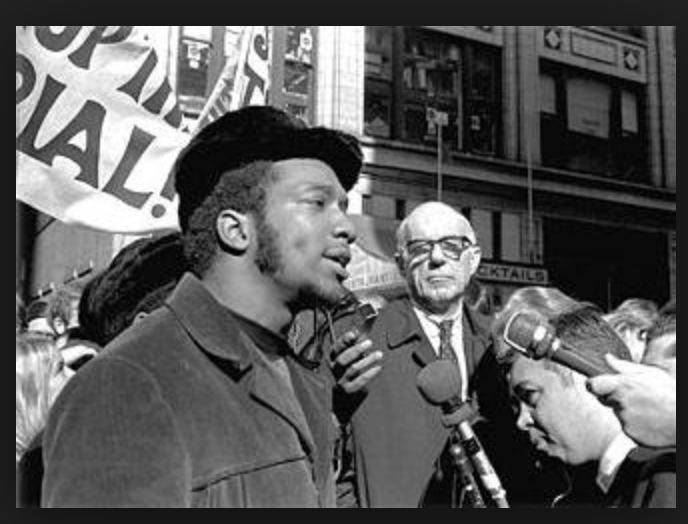
   The great Fred Hampton was assassinated in his bed by the FBI. This is not a secret.  Historically one of the most charismatic and brilliant leaders of what would have likely been a successful movement to begin to dismantle the capitalist system, Fred Hampton had to be killed.  He was a tremendous threat to the powers that be so they walked into his house in the middle of the night and shot him while he slept.  Fred Hampton was just 21 years old.  Black Panther leader Mark Clark was also killed.  Fred Hampton's wife survived the attack somehow.


   Here are excerpts of Fred Hampton's own words from the documentary made about him:

FRED HAMPTON
: "So we say—we always say in the Black Panther Party that they can do anything they want to to us. We might not be back. I might be in jail. I might be anywhere. But when I leave, you’ll remember I said, with the last words on my lips, that I am a revolutionary. And you’re going to have to keep on saying that. You’re going to have to say that I am a proletariat, I am the people."


   "A lot of people don’t understand the Black Panthers Party’s relationship with white mother country radicals. A lot of people don’t even understand the words that Eldridge uses a lot. But what we’re saying is that there are white people in the mother country that are for the same types of things that we are for stimulating revolution in the mother country. And we say that we will work with anybody and form a coalition with anybody that has revolution on their mind. We’re not a racist organization, because we understand that racism is an excuse used for capitalism, and we know that racism is just—it’s a byproduct of capitalism. Everything would be alright if everything was put back in the hands of the people, and we’re going to have to put it back in the hands of the people."    


   "With no education, the people will take the local foundation and start stealing money, because they won’t be really educated to why it’s the people’s thing anyway. You understand what I’m saying? With no education, you have neocolonialism instead of colonialism, like you’ve got in Africa now and like you’ve got in Haiti. So what we’re talking about is there has to be an educational program. That’s very important. As a matter of fact, reading is so important for us that a person has to go through six weeks of our political education before we can consider himself a member of the party able to even run down ideology for the party. Why? Because if they don’t have an education, then they’re nowhere. You dig what I’m saying? They’re nowhere, because they don’t even know why they’re doing what they’re doing. You might get caught up in the emotion of this movement. You understand me? You might be able to get them caught up because they’re poor and they want something. And then, if they’re not educated, they’ll want more, and before you know it, they’ll be capitalists, and before you know it, we’ll have Negro imperialists."


   "We don’t think you fight fire with fire; we think you fight fire with water. We’re going to fight racism not with racism, but we’re going to fight with solidarity. We say we’re not going to fight capitalism with black capitalism, but we’re going to fight it with socialism. We’re still here to say we’re not going to fight reactionary pigs and reactionary state’s attorneys like this and reactionary state’s attorneys like Hanrahan with any other reactions on our part. We’re going to fight their reactions with all of us people getting together and having an international proletarian revolution."


   "Black people need some peace. White people need some peace. And we are going to have to fight. We’re going to have to struggle. We’re going to have to struggle relentlessly to bring about some peace, because the people that we’re asking for peace, they are a bunch of megalomaniac warmongers, and they don’t even understand what peace means. And we’ve got to fight them. We’ve got to struggle with them to make them understand what peace means."


   "Bobby Seale is going through all types of physical and mental torture. But that’s alright, because we said even before this happened, and we’re going to say it after this and after I’m locked up and after everybody’s locked up, that you can jail revolutionaries, but you can’t jail the revolution. You might run a liberator like Eldridge Cleaver out of the country, but you can’t run liberation out of the country. You might murder a freedom fighter like Bobby Hutton, but you can’t murder freedom fighting, and if you do, you’ll come up with answers that don’t answer, explanations that don’t explain, you’ll come up with conclusions that don’t conclude, and you’ll come up with people that you thought should be acting like pigs that’s acting like people and moving on pigs. And that’s what we’ve got to do. So we’re going to see about Bobby regardless of what these people think we should do, because school is not important and work is not important. Nothing’s more important than stopping fascism, because fascism will stop us all."

  Fred Hampton's fiancee Deborah Johnson who was 9 months pregnant at the time

DEBORAH JOHNSON: "Someone came into the room, started shaking the chairman, said, "Chairman, Chairman, wake up. The pigs are vamping." Still half asleep, I looked up, and I saw bullets coming from, it looked like, the front of the apartment, from the kitchen area. They were—pigs were just shooting.
"And about this time, I jumped on top of the chairman. He looked up. Looked like all the pigs had converged at the entranceway to the bedroom area, back bedroom area. The mattress was just going—you could feel bullets going into it. I just knew we’d be dead, everybody in there. When he looked up, just looked up, he didn’t say a word. He didn’t move, except for moving his head up. He laid his head back down, to the side like that. He never said a word. He never got up off the bed.
"The person who was in the room, he kept hollering, "Stop shooting! Stop shooting! We have a pregnant woman, a pregnant sister in here!" At the time I was eight-and-a-half, nine months pregnant. My baby was to be delivered in two weeks. Pigs kept on shooting. So I kept on hollering out. Finally, they stopped.
"They pushed me and the other brother by the kitchen door and told us to face the wall. Heard a pig say, "He’s barely alive. He’ll barely make it." I assumed they were talking about Chairman Fred. Then they started shooting. The pigs, they started shooting again. I heard a sister scream. They stopped shooting. Pig said, "He’s good and dead now." The pigs were running around laughing. They was really happy, you know, talking about Chairman Fred is dead. I never saw Chairman Fred again."
Fred Hampton Jr. is active in prison rights struggle now.

   A quote from one of the lawyers of the Hampton Family:  "...it is important not to relegate the Hampton assassination and COINTELPRO to the annals of history. In light of the current revelations concerning the systemic illegal activities of the National Security Agency and the FBI in the name of fighting terrorism, it is well to remember a quote from a 1964 COINTELPRO memorandum sent to the New York, Chicago and Washington FBI Offices by Director Hoover in which he claimed credit for "disrupting" and "neutralizing" the Communist Party:

"Over the years, our approach to investigative problems in the intelligence field has given rise to a number of new programs, some of which have been most revolutionary, and it can be presumed that with a continued aggressive approach to these programs, new and productive ideas will be forthcoming. These ideas will not be increased in number or improved upon from the standpoint of accomplishments merely through the institution of a program such as COINTELPRO which is given another name and in fact, only encompasses everything that has been done in the past or will be done in the future."

   From Wikipedia - to show just a tiny bit of the effectiveness of Fred Hampton:  "Fred Hampton was quickly moving up the ranks in the Black Panther Party, and his talent as a political organizer was described as remarkable.[5][6] In 1968, he was on the verge of creating a merger between the BPP and a southside street gang with thousands of members, which would have doubled the size of the national BPP.[5][6] Moreover, it meant an alliance extending the Black Panther Party reach and influence united with white and Latino organizers, a step which Hoover viewed as an untenable ultimate threat and ordered an intensified FBI crackdown to the level of "any means necessary" to decimate the BPP.[8]"

   No other Black Panther Party leader was amalgamating the various sectors of our class society into a united power that would have been capable of at the very least challenging the now monster Billionaire Boys Club who have taken over our society.  WE NEED FRED HAMPTON AGAIN!!