Showing posts with label Alabama. Show all posts

Monday, March 28, 2016

MARCH IS WOMEN'S HISTORY MONTH -- ANGELA DAVIS


“Radical simply means “grasping things at the root.””

   Angela Davis was interviewed on Democracy Now! this morning. I actually had decided to talk about her before this but it was a lovely convergence. Serendipitous? What is that word I want?  
   I cannot pinpoint the moment I became aware of Angela Davis as a leader and activist.  I know she played a role in my thoughts of women as leaders -- she gave me some hope. It didn't surprise me too much that she teaches in the Department of Feminist Studies at UC Santa Cruz.  A friend told me the lovely story of two young women whose mother left them with their father and went off to become what she had intended to become.  It wasn't until these two women studied with Angela Davis at UCSC that they understood their mothers' reasons and could accept that the plight of a woman is a most difficult one.
   I had a mother who should have been a writer, a pianist, a singer, and definitely an actress. But she was too poor to do any of these things.  She did end up writing at the end of her life -- short stories and poetry.  But had she not been poor and a woman, I feel she would have done much more.   Her one lesson to me was to teach me to be economically independent of any man -- while not so much in words did she teach this, but by example.  
    Angela Davis was an iconic presence all through my activism days in the 1960s and 70s.  She loomed large in my thoughts and imagination. I am grateful they did not kill her -- a communist, an African American, and a woman who never gave up, never lost her voice.  The strength of this woman is boundless.  Did you know there was a world wide movement to free her?   I know the anti-communists trolling the Internet will come out and attack her as a Communist. Well in fact, she is one and she is proud of it.  Or she was one, is still a socialist, and proud of it!! She said today that she we need a third party in this country.  I hope she can help to found one.


   "Davis was born in Birmingham, Alabama, on January 26, 1944, the eldest of four children. Her family was relatively well-off among the blacks in the city. Her father and mother were teachers in the Birmingham school system, and her father later purchased and operated a service station.

   "When Davis was four years old, the family moved out of the Birmingham projects and bought a large wooden house in a nearby neighborhood. Other black families soon followed. Incensed white neighbors drew a dividing line between the white and black sections and began trying to drive the black families out by bombing their homes. The area soon was nicknamed Dynamite Hill. Davis's mother had in college been involved in antiracism movements that had brought her into contact with sympathetic whites. She and Davis's father tried to teach their daughter that this hostility between blacks and whites was not preordained.

   "All of Birmingham was segregated during Davis's childhood. She attended blacks-only schools and theaters and was relegated to the back of city buses and the back doors of shops, which rankled her. On one occasion, as teenagers, Davis and her sister Fania entered a Birmingham shoe store and pretended to be non-English-speaking French visitors. After receiving deferential treatment by the salesmen and other customers, Davis announced in English that black people only had to pretend to be from another country to be treated like dignitaries."


   "Davis later wrote that although the black schools she attended were much poorer than the white schools in Birmingham, her studies of black historical and contemporary figures such as frederick douglass, sojourner truth, and Harriet Tubman helped her develop a strong positive identification with black history.

"We have accumulated a wealth of historical experience which confirms our belief that the scales of justice are out of balance."
—Angela Davis

   "The civil rights movement was beginning to touch Birmingham at the time Davis entered high school. Her parents were members of the National Association for the Advancement of Colored People (naacp). In her junior year of high school, Davis decided to leave what she considered to be the provincialism of Birmingham.

   "She applied for an early entrance program at Fisk University, in Nashville, Tennessee, and an experimental program developed by the American Friends Service Committee (AFSC) through which black students from the South could attend integrated high schools in the North. Although Davis was admitted to Fisk—which she viewed as a stepping-stone to medical school, where she could pursue a childhood dream of becoming a pediatrician—she chose the AFSC program."


   "At age 15, she boarded a train for New York City. There, she lived with a white family headed by an Episcopalian minister who had been forced from his church after speaking out against Senator joseph r. mccarthy's anti-Communist witch-hunts. Davis attended Elisabeth Irwin High School, located on the edge of Greenwich Village. The school originally had been a public school experiment in progressive education; when funding was cut off, the teachers turned it into a private school. Here, Davis learned about socialism and avidly studied the Communist Manifesto. She also joined a Marxist-Leninist youth organization called Advance, which had ties to the Communist Party.

  "In September 1961, Davis entered Brandeis University, in Waltham, Massachusetts, on a full scholarship. One of only three black first-year students, she felt alienated and alone. The following summer, eager to meet revolutionary young people from other countries, Davis attended a gathering of communist youth from around the world in Helsinki, Finland. Here, she was particularly struck by the cultural presentations put on by the Cuban delegation. She also found that the U.S. central intelligence agency had stationed agents and informers throughout the festival. Upon her return to the United States, Davis was met by an investigator from the federal bureau of investigation(FBI), who questioned her about her participation in a communist event.

   "Meeting people from around the world convinced Davis of the importance of tearing down cultural barriers like language, and she decided to major in French at Brandeis. She was accepted in the Hamilton College Junior Year in France Program, and studied contemporary French literature at the Sorbonne, in Paris. Upon her return to Brandeis, Davis, who had always had an interest in philosophy, studied with the German philosopher Herbert Marcuse. The following year, she received a scholarship to study philosophy in Frankfurt, Germany, where she focused on the works of the Germans Immanuel Kant, Georg Hegel, and Karl Marx."


   "During the two years Davis spent in Germany, the black liberation and black power movements were emerging in the United States. The Black Panther Party for self-defense had been formed in Oakland to protect the black community from police brutality. In the summer of 1967, Davis decided to return home to join these movements.

   "Back in Los Angeles, Davis worked with various academic and community organizations to build a coalition to address issues of concern to the African American community. Among these groups was the Black Panther Political Party (unrelated to huey newton and Bobby Seale's Black Panther Party for Self-Defense). During this period, Davis was heavily criticized by black male activists for doing what they considered to be men's work. Women should not assume leadership roles, they claimed, but should educate children and should support men so that they could direct the struggle for black liberation. Davis was to encounter this attitude in many of her political activities.

   "By 1968, Davis had decided to join a collective organization in order to achieve her goal of organizing people for political action. She first considered joining the Communist Party. But because she related more to Marxist groups, she decided instead to join the Black Panther Political Party, which later became the Los Angeles branch of the student nonviolent coordinating committee (SNCC). SNCC was soon embroiled in internal disputes. After her longtime friend Franklin Kenard was expelled from his leadership position in the group because of his Communist Party membership, Davis resigned from the organization. In July 1968, she joined the Che-Lumumba Club, the black cell of the Communist Party in Los Angeles.


   "In 1969, Davis was hired as an assistant professor of philosophy at the University of California, Los Angeles. In July 1969, Davis joined a delegation of Communist Party members who had been invited to spend a month in Cuba. There, she worked in coffee and sugarcane fields, and visited schools, hospitals, and historical sites. Davis remarked that everywhere she went in Cuba, she was immensely impressed with the gains that had been made against racism. She saw blacks in leadership positions throughout the country, and she concluded that only under a socialist system such as that established by Cuban leader Fidel Castro could the fight against racism have been so successful.

   "When she returned to the United States, she discovered that several newspaper articles had been published detailing her membership in the Communist Party and accusing her of activities such as gunrunning for the Black Panther party. Governor Ronald Reagan, of California, invoked a regulation in the handbook of the regents of the University of California that prohibited the hiring of communists.   Davis responded by affirming her membership in the Communist Party, and she began to receive hate mail and threatening phone calls. After she obtained an injunction prohibiting the regents from firing her, the threats multiplied. Soon, she was receiving so many bomb threats that the campus police stopped checking her car for explosives, forcing her to learn the procedure for doing so herself. By the end of the year, the courts had ruled that the regulation prohibiting the hiring of communists was unconstitutional. However, in June 1970, the regents announced that Davis would not be rehired the following year, on the grounds that her political speeches outside the classroom were unbefitting a university professor."


   "During this time, Davis became involved with the movement to free three black inmates of Soledad Prison in California: George Jackson, John Clutchette, and Fleeta Drumgo. The men, known as the Soledad Brothers, had been indicted for the murder of a prison guard. The guard had been pushed over a prison railing when he inadvertently stumbled into a rebellion among black prisoners caused by the killing of three black prisoners by another prison guard. Although Jackson, Clutchette, and Drumgo claimed there was no evidence that they had killed the guard, they were charged with his murder. Davis began corresponding with Jackson and soon developed a personal relationship with him. She attended all the court hearings relating to the Soledad Brothers' indictment, along with many other supporters, including Jackson's younger brother, Jonathon Jackson, who was committed to freeing his brother and the other inmates. On August 7, 1970, using guns registered to Davis, Jonathon attempted to free his brother in a shoot-out at the Marin County Courthouse. Four people were killed, including Jonathon and superior court judge Harold Haley.

   "Davis was charged with kidnapping, conspiracy, and murder, which was punishable in California by death. She fled, traveling in disguise from Los Angeles to Las Vegas, Chicago, Detroit, New York, Miami, and finally back to New York. In October 1970, she was arrested by the FBI, which had placed her on its most wanted list. In December, after two months in jail, Davis was extradited to California, where she spent the next 14 months in jail. She later said that this period was pivotal to her under-standing of the black political struggle in the United States. Having worked to organize people in communities and on campuses against political repression, Davis now found herself a victim of that repression. In August 1971, while incarcerated in the Marin County Jail, she was devastated to learn that George Jackson had been killed by a guard in San Quentin Prison, allegedly while trying to escape.

   "In February 1972, Davis was released on bail following the California Supreme Court's decision to abolish the death penalty (People v. Anderson, 6 Cal. 3d 628, 100 Cal. Rptr. 152, 493 P. 2d 880). Previously, bail had not been available to persons accused of crimes punishable by death. Her trial began a few days later, and lasted until early June 1972, when a jury acquitted her of all charges."


   "After her acquittal, Davis resumed her teaching career, at San Francisco State University. She continued her affiliation with the Communist Party, receiving the Lenin Peace Prize from the Soviet Union in 1979 and running for vice president of the United States on the Communist Party ticket in 1980 and 1984. Davis is also a founder and cochair of the National Alliance against Racist and Political Repression, and is on the national board of the National Political Congress of Black Women and on the board of the Atlanta-based National Black Women's Health Project. She has authored several books, including Angela Davis: An Autobiography (1974), Women, Race, and Class (1983), Women, Culture, and Politics (1989), and Blues Legacies and Black Feminism (1998). In 1980, she married Hilton Braithwaite, a photographer and faculty colleague at San Francisco State. The marriage ended in divorce several years later.

   "In 1991, Davis began teaching an interdisciplinary graduate program titled the History of Consciousness at the University of California, Santa Cruz. In 1994, she found herself again surrounded by controversy when she was awarded a prestigious University of California President's Chair by university president Jack Peltason. The appointment provides $75,000 over several years to develop new ethnic studies courses. Some state lawmakers were outraged over the award and unsuccessfully demanded that Peltason rescind the appointment. Davis held the position until 1997.

   "In the late 1990s and early 2000s, Davis was still speaking out against and writing about the plight of persons she considered to be political prisoners, such as Indian activist Leonard Pelletier and ex-Black Panther Mumia Abu-Jamal, both convicted of killing law enforcement officers. She has continued to call for the decriminalization of prostitution on the basis that it would greatly reduce the number of women in prison. And she has lectured on what she calls the Prison Industrial Complex (PIC), positing that imprisonment has become the most common answer to societal problems and that corporations are profiting from prison labor thereby weakening the chances of prison reform. In 1997, Davis helped found Critical Resistance, an organization that seeks to build an international movement dedicated to dismantling the PIC.

   "Since the late 1970s, Davis has lectured throughout the United States and in countries in Africa, Europe, and Asia. She also remains a prolific author, producing numerous articles and essays. In 2003, in addition to writing and traveling for speaking engagements, Davis continued her work as tenured professor at the University of California at Santa Cruz."

THIS BIO FAILS TO MENTION A WORLD WIDE CAMPAIGN TO FREE ANGELA DAVIS. John Lennon and Mick Jagger wrote songs about her.  Here's Mick and Keith Richard's song - "SWEET BLACK ANGEL"
Got a sweet black angel
Got a pin up girl
Got a sweet black angel
Up upon my wall
Well, she ain't no singer 
And she ain't no star
But she sure talk good
And she move so fast
But the gal in danger
Yeah, de gal in chains
But she keep on pushin'
Would ya take her place? 
She countin' up de minutes
She countin' up de days
She's a sweet black angel, whoa
Not a sweet black slave

Ten little niggers 
Sittin' on de wall
Her brothers been a fallin'
Fallin' one by one
For a judge they murdered 
And a judge they stole
Now de judge he gonna judge her 
For all dat he's a worth

Well de gal in danger
De gal in chains
But she keep on pushin' 
Would you do the same? 
She countin' up de minutes
She countin' up de days
She's a sweet black angel
Not a gun toting teacher
Not a Red lovin' school mom
Ain't someone gonna free her
Free de sweet black slave
Free de sweet black slaveWriter/s: JAGGER, MICK/RICHARDS, KEITH 
Publisher: Sony/ATV Music Publishing LLC, BMG RIGHTS MANAGEMENT US, LLC, SONY ATV MUSIC PUB LLC
Lyrics licensed and provided by LyricFind


   Angela Davis is a brilliant professor who has contributed much to the struggle for political and civil rights.  Please read her latest book above.  She also has an autobiography or two available.  Read with an open mind - and think #BLACKLIVESMATTER.

Further readings
Davis, Angela. 1974. Angela Davis: An Autobiography. New York: International Publishers.
James, Joy, ed. 1998. The Angela Y. Davis Reader. Malden, Mass.: Blackwell.
"The Two Nations of Black America: Interview with Angela Davis." 1998. PBS: Frontline. Available online at <www.pbs.org/wgbh/pages/frontline/shows/race/interviews/davis.html> (accessed June 30, 2003).

IMDB Biography - http://www.imdb.com/name/nm0204171/bio   [this bio is pretty stupid and biased against her]
Colorlines interview on Prison/Industrial complex - http://www.colorlines.com/articles/masked-racism-reflections-prison-industrial-complex  

Friday, March 25, 2016

MARCH IS WOMEN'S HISTORY MONTH - VIRGINIA FOSTER DURR : CIVIL RIGHTS ACTIVIST AND TRAITOR TO HER CLASS AND RACE


1903-1999

   In 1966 or so I traveled with my parents to Alabama, Georgia, and North Carolina to see the southern side of my family.  We flew to Montgomery and rented a car that we drove all the way up the Blue Ridge Parkway, Appalachian Trail, etc.   At almost every meal I got my first taste of grits, which I kind of instinctively liked (and realized now 50 years later why I like Ugali, the staple of Tanzania). Ostensibly this was my southern exposure -- and my mother commanded me to buy a pair of white sandals or I couldn't be seen.  Our first visit was to the home of Virginia and Clifford Durr, my parents' dearest friends from Washington DC days.  Virginia was a character and I felt an immediate connection between her and my father the Red.  They joked about everything and agreed on everyone and everything.  My mother clearly felt left out.  I felt badly for my mother, who as we drove away commented only on the condition of Virginia's clothing (kinda soiled). Both my dad and I jumped on my poor white sandals mother for being so superficial.  Virginia was a fighter for civil rights in one of the most dangerous times in the south.  She rejected her horrible upper class white family in favor of the struggle.  To me she was a giant.
   I can now forgive my poor mother and understand where she came from.  My mother was PWT - poor white trash - really.  No money to speak of, no culture, racist to the core family.  While Virginia's family was racist, they were also rich and sent her away to Wellesley where the college quickly parted Virginia from her racist ways by telling her she would be expelled!!! In those days, and with a woman, perhaps, of her intelligence, the tactic worked beautifully.    So here is Virginia's story in part.  [Just an aside, I did visit them when I was very young and we were on the way in our escape from the FBI. Virginia gave me a dress of one of her many daughters and I called it my "Virginia Durr dress". It was precious to me having lost almost everything by that time.]  I also want to add that the Durrs were impoverished when we visited them in 1966 and the damn US government expected them to entertain foreign guests.  Blacklisted and impoverished, this was a cruel fate for such fighters for civil rights.  We ended up trying to bring them as much food as we could afford.

   I am borrowing from the impressive post by Dorothy M. Zellner, a civil rights activist who knew Virginia Durr very well and can tell you more about her than I ever could, including her salty language that my father loved (and my mother disdained).  In telling you about Virginia, she also gives a great portrait of the real ROSA PARKS whose life has been hidden for so many years.
   Back in 1966 Virginia Durr told me the story of the wonderful Claudette Colvin which I didn't really understand in my 19 years of life. Yes, she was pregnant and unwed, but...Anyway, Rosa Parks was already so famous by then even that it didn't matter that much to me at the time.  But it did gnaw away at my incredibly strong sense of injustice.
     "I never had the honor of meeting Mrs. Parks, but I knew Virginia Durr quite well. She was one of those fabulous characters that the white South throws up now and then. She could easily have become an alcoholic Zelda Fitzgerald or a Blanche DuBois, if the circumstances of her life had shifted just a little bit. Instead, Virginia was fortunate to have been radicalized and not destroyed by what she saw around her in Birmingham, Alabama, as an aristocratic white matron during the worst days of the Depression. “Whah, Dottie,” she would exclaim to me in the thickest of Southern accents, “people were hungry and had nothing, so how could I go to the Junior League meetings when milk was being poured down the sewers?”
   "Virginia and her husband, Clifford J. Durr, a patrician white Southern attorney, were certainly on their way up during the late 1930s and’40s. They seemed to have met or known every powerful person in the New Deal administration, especially after Clifford became a commissioner of the Federal Communications Commission (FCC). Virginia’s sister Josephine (called “Sister” throughout her life) married the former KKK member and great liberal Supreme Court justice, Hugo L. Black. In later life, Virginia loved nothing more than to tell dramatic anecdotes, dropping into the narrative that “Lyndon said this” and “when I called Ladybird” and “Eleanor” and “Sister and Hugo” and so on."


   "Once settled in a suburb of Washington, D.C., with four children and two full-time servants, Virginia operated from privilege and could have kept herself busy going to teas and cocktail parties. As the wife of a member of the FCC, she had all doors of government and society open to her. Instead, she started organizing with other women against the poll tax, which had effectively disenfranchised poor Black people. From there she ot involved with protests against lynching.

   "In addition to knowing really famous people, she also became friends with several Southern rebels like herself, including Aubrey Williams, the director of the National Youth Administration, a New Deal agency, and Myles Horton, the director of the Highlander Folk School. They all met at the 1938 founding conference of the Southern Conference for Human Welfare in Birmingham, Alabama. This meeting stirred up some notoriety when Eleanor Roosevelt refused to obey Police Commissioner Eugene “Bull”Connor’s dictum that whites and Blacks sit separately in two sections of the auditorium; Mrs. Roosevelt put her chair in the middle aisle, right on the racial dividing line, and sat there throughout the meeting."
    "During the 1948 Henry Wallace presidential campaign, Virginia ran for senator on the Progressive Party ticket in Virginia. These heady days of proximity to fame and power all came crashing down in the lunatic days of what we now call McCarthyism, which began several years before anyone had heard of that late and unlamented senator. Virginia said in her autobiography/oral history, Outside the Magic Circle (edited by Hollinger F. Barnard, University of Alabama Press, 1985),
   "By the late ’40s the Cold War began to affect the FCC and Cliff’s work there. J. Edgar Hoover would send over FBI reports on people who wanted radio stations: Mr. So-and-so had been identified by T-19 as having had connections with So-and-so, who was seen by agent T-17 at a Communist meeting. The FCC began refusing people radio licenses on the word of faceless FBI informants. Cliff and Hoover got into a terrible fight then, because Cliff thought that to deny a man a license on the basis of anonymous T-17 information was terrible."
   [My father hired Lyndon Johnson for his first Federal job working for the National Youth Administration.   My father was Henry Wallace's main speechwriter for The Progressive Party - just two ways that my father and Virginia and Clifford Durr knew each other.]
   

Vito Marcantonio, Henry Wallace, and Paul Robeson for the Progressive Party.

   "When Clifford realized that, as a member of the FCC or as its possible chairman, he would be forced to administer loyalty oaths to all FCC employees and to rely on allegations from nameless informants, he refused a reappointment when President Truman offered it in 1948. In Virginia’s characteristic style, she said:
   "Cliff went off to see Truman and told him that he could not accept reappointment to the FCC and that he was against the loyalty oath. Truman told him that he was just trying to get ahead of Parnell Thomas, who was then head of the UnAmerican Activities Committee. Parnell Thomas was holding meetings in Hollywood and everywhere. Of course, he later went to the penitentiary for stealing from his own employees, or making them divvy up with him."
   "After two years in a struggling private law practice in Washington, the Durrs went to Denver, where Clifford had been offered the job of general counsel to the Farmers’ Union in Denver. This job lasted little more than a year before Clifford was fired after Virginia made the mistake of signing a petition against the Korean War. He longed to return to Alabama and Virginia agreed, though she was more than a little apprehensive about how they would survive there, both socially and economically. The family moved to Montgomery in 1951and Cliff opened a law office in 1952, with Virginia as his secretary."


    "For some time they lived “quietly,” as Virginia said, especially since Virginia had taken the precaution of resigning from every organization to which she belonged to avoid any unpleasantness with Clifford’s family, who were for the most part traditional white Southerners — that is, segregationists. Yet she was no longer the same woman who had grown up in Alabama. The racism surrounding her was too visible to ignore. For example: Mr. Ed Nixon, who was head of the NAACP in Montgomery [and leader of the 1955 Montgomery Bus Boycott that was sparked by Rosa Parks’ arrest] brought Cliff a lot of cases. Mr. Nixon was a very nice man and we liked him a lot . . . I had known Mr. Nixon for two or three years and I’d always called him Mr. Nixon and he called me Mrs. Durr. One day I saw him at the post office. I said, “Why, hello, Ed.”. . . He didn’t say anything. I held out my hand and said, “Hello, Ed,” and he didn’t take my hand. I went back to the office with the mail and in about fifteen minutes, he came up and sat down.

“Now Mrs. Durr, I want to get something straight with you.”

“Well, what in the world?”

“Look, don’t you ever call me Ed again. If I called you Virginia, I’d be lynched. . . . And to shake my hand in public that way, that’s going to get me in trouble. Now when I can call you Virginia, you can call me Ed. And I’ll shake your hand in public when it’s safe. You ought to have better sense than to come up to a black man in the public post office and say ‘Hello, Ed’ and put out your hand.”

“We were caught up in the system of segregation in Montgomery just like everybody else,” Virginia’s oral history continued. “. . . Cliff had such mixed emotions. Alabama was home, and we were near his family. But our ideas — our ideas about race especially — were painfully different from those of Cliff’s family.”


   "The Durrs probably would have continued eking out an existence (hardly the lifestyle of the “powerful white lawyer” described by Juan Williams) at the fringes of white society, probably tolerated as eccentrics with good family connections — except for Virginia’s suddenly being subpoenaed in 1954 by the infamous racist, Senator James O. Eastland of Mississippi, to testify before the Senate Internal Subcommittee in New Orleans.

   "Red-hunting federal and state committees were competing with each other about who could uncover the most “Communists” and get the most publicity. The federal committees in Washington often held hearings in distant destinations like New Orleans, thereby proving their mettle and justifying their existence to an increasingly fearful populace.

   "Virginia had already formed her own opinion of Senator Eastland: “a low-down, common as pig tracks, redneck, hillbilly something,” she told me. (See my article, “Red Road-show: Eastland in New Orleans, 1954,” in the Winter 1992 issue of Louisiana History.) “I must say,” she confessed, “I was still a Southern snob. I thought I had gotten over it, but when it came to Eastland, all those old familiar phrases came to mind.”

   "Also subpoenaed was Myles Horton, director of the Highlander Folk School (which was cited by Juan Williams in his New York Times piece as a force in the political education of Rosa Parks). The ostensible purpose of the hearings was, according to Eastland, to expose “Communist influence” in the Southern Conference Educational Fund (SCEF), an offshoot of the Southern Conference for Human Welfare, which had been endorsed by Eleanor Roosevelt in1938. By 1947, the Southern Conference for Human Welfare had already been investigated and labeled as “one of the most unscrupulous and most successful Communist-front organizations in the country.”


   "Virginia did everything she could, behind the scenes, to get the hearings cancelled or to limit their effect. “I was calling everybody in the world, newspaper people, everyone,” she told me. “I was really ringing the alarm.” She called “Ladybird” and “Lyndon,” and though he said he could do little about the hearings, when they began on March 8th, 1954,Eastland was the only senator to show up. Virginia was intensely satisfied, because she had feared a bipartisan show that could make Committee recommendations (including contempt proceedings) more difficult to reverse in Congress. She was confident, as she told me, that “we could take Eastland on alone.”

   "Rumors had circulated in Washington for months that the Supreme Court was about to make a historic decision concerning school desegregation. Another frothing-at-the-mouth racist, Representative John Bell Williams of Mississippi, chose the day before Eastland’s hearings opened to issue a rant about the dire events that would occur if segregation were overruled. For some reason, the Black members of SCEF’s Board were not called to testify. Myles Horton told me he thought this was an effort to drive a wedge between Blacks and whites in SCEF; Virginia thought it an attempt to get at her, assister-in-law of Justice Hugo Black, and therefore to discredit the upcoming Supreme Court decision.

   "'The white press either ignored or supported the hearings, but the Black press universally condemned them. Louisiana Weekly published an open letter from thirty-two Black educators from fifteen states that called the investigation “an attack upon the Negro community of this nation” and described SCEF as “spearhead[ing] the fight against segregation in the South.”

   "The hearings progressed as such hearings usually did, with professional informers testifying to the “Communist” affiliations of the witnesses, who then had either to plead the Fifth Amendment (protection against self-incrimination) and be excoriated in the press, or plead the First Amendment (freedom of speech) and risk going to jail for contempt of Congress. When it was Virginia’s turn to testify, she gave her name and said truthfully that she was “not under Communist discipline.” (She explained this behavior in later years in terms of her vulnerability as Justice Black’s sister-in-law; she did not want to give Eastland’s cohorts any more ammunition against the anticipated Supreme Court decision). To every other question, she said, “I am not answering. I stand mute.” Since Virginia was known by one and all as a non-stop talker, several people in the courtroom erupted into laughter.

   "The professional informer Paul Crouch, however, stated that Virginia had “plotted with the Communist leaders to exploit her relationship as sister-in-law of a Justice of the Supreme Court in the interests of world communist conspiracy and interest of overthrowing our government.”


   "When Miles Horton’s turn came to testify, he explained that Highlander’s mission was to educate “rural and industrial leaders for democratic living and activity.” This was a rather dry way of describing Highlander, which was an interracial safe haven in the South that taught citizenship rights, progressive social and political history, and the music of the movement. Horton attempted to read a statement but was cut off by Eastland, who then ordered two deputy U.S. marshals to drag him from his chair and hustle him out of the room. Virginia rushed out to see what was happening to him; in the meantime, Crouch was on the stand again, this time saying that Virginia had “full knowledge of the conspiratorial nature” of the activities of some of the members of the Southern Conference for Human Welfare who were obtaining “intelligence information from the White House for the benefit of the Communist Party and the Soviet Government.”

   "This was too much for Clifford, normally a soft-spoken and most genteel Southern gentleman. He vaulted over the railing, flung himself on Crouch and attempted to choke him, shouting, “You son of a bitch, I’ll kill you for lying about my wife!” The courtroom burst into bedlam and Clifford, who had a heart condition and chronic back problems, was taken to a bench in the hallway where he lay down, trembling, while Virginia called a doctor. Later they found that Clifford had suffered a mild heart attack.

   "On May 17th, 1954, as anticipated, the Supreme Court ruled on Brown v. Board of Education and declared school segregation unconstitutional.

   "In her autobiography, Virginia notes that Myles Horton wrote to her in the summer of 1955 requesting the name of a Black person who might want to fill a scholarship at Highlander Folk School. She immediately thought of Rosa Parks and went to her house to ask her if she would like to go."

   "She said that she would but didn’t have any money. You can imagine under what straitened circumstances they lived, even doing extra sewing, which she never charged enough for . . . I went over and got the money from Aubrey Williams [former head of the New Deal agency National Youth Administration, who had been subpoenaed by Eastland the year before] . . . bus fare to Highlander and back was no more than twelve or fifteen dollars . . . Rosa Parks is one of the proudest people I’ve ever known in  my life. She hated to admit she didn’t have a suitcase or a bathing suit or money. It was painful for her . .. so all of this had to be accomplished with a great deal of tact, which I am not noted for . . . By that time she’d gotten fond of me, too, and she really wanted to go. . .. So she went to the Highlander Folk School and she had a wonderful time. Now Myles has always taken great pride in the fact that he thought Mrs. Parks’ stay at Highlander encouraged her in the boycott. Having known Mrs. Parks, I think it gave her a great lift. She loved it . . . "

   "When Mrs. Parks came back from Highlander, she still had her job at the Montgomery Fair as seamstress. It was during the Christmas rush and the room where she worked was little and hot. The heavy pressing irons added to the heat. She had bursitis in her shoulder, which pained her very much. One afternoon she stopped to buy a big bag of groceries after work. Her arm was very painful, and she was exhausted from her day spent in that hot little room. She had complained about the bus to me and discussed it many times. She had told me how she’d pay her money and then have to run around to the back door to get in, and the driver would slam the door and ride off leaving her standing on the curb after she’d paid her money. She had resented this for years. She resented having to get up and give her seat to white people. The buses had been a very hot issue in Montgomery. The local NAACP had had many cases they’d tried to take into the courts about it. . .

   "This particular afternoon, Mrs. Parks later told me, she was exhausted. The bus she took went out to the housing project and was full of blacks, but some white men got on. The bus driver turned around and said, the way they always said, “Niggers, move back.” And she just sat. The driver came up to her. He said, “Did you hear me say to move back?” She said yes. He said, “Are you going to move back?” She said no. He called the police, and they came and arrested her and took her to jail. . . . "

   "We got home about five o’clock from the office. . . We had just walked in and poured some coffee when the telephone rang. It was Mr. Nixon. He said, “Mr. Durr, will you call the jail and see why Mrs.Parks has been arrested? The police had recognized [Nixon’s] voice as being that of a black man, and they wouldn’t tell him anything . . . Cliff called the jail . . . They told him she’d been booked on the city segregation ordinance .. . Mr. Nixon asked if Cliff would go down with him to make bail. Cliff said, “Mr. Nixon, I don’t have anything to make bail with.”. . . Mr. Nixon said, “That’s all right. I can get bail, if you’ll just go with me.’ He was afraid they wouldn’t let him make bail. I was determined to go, too . . .

   "I waited for them while they made bail. Everything went very smoothly. They brought Mrs. Parks out from behind the bars. That was a terrible sight to me to see this gentle, lovely sweet woman whom I knew and was so fond of, being brought down by a matron. She wasn’t in handcuffs, but they had to unlock two or three doors that grated loudly. She was very calm. I asked her how they had treated her and she said, “Very nicely.” Just at that moment her husband arrived. He was very excited and upset. . . . Of course, Mr. Nixon wanted her to make a test case of it. Mr. Nixon remembers her as being extremely reluctant to do so, but I remember that it was her husband who was so reluctant. . . . [T]hat night it was decided that Mrs. Parks would challenge the bus ordinance on constitutional grounds, and Fred Gray [one of the few Black lawyers in Alabama at the time] would represent her. It would be an NAACP case and Cliff would do all he couldt o help Fred, but Cliff would not be the lawyer of record.

    "Mrs. Parks was bought up to trial on the Monday after her arrest. In the meantime, Mr. Nixon had organized a boycott of the buses on the day of her trial. It was supposed to be just a one-day boycott. I can very well remember going to a meeting Mr. Nixon had that Sunday afternoon at a black church. It was an NAACP meeting and Mr. Nixon asked me to come. I remember that he was very emotional. He said to the people, “I’m a Pullman porter and every time I go on my job, I put on an apron or a jacket.” He said, “You know, we’ve been wearing aprons for three hundred years. It’s time we took off our aprons."


   "I met Virginia Durr in 1962, when I was as a young worker for the Student Nonviolent Coordinating Committee (SNCC). I visited her in her home many times, as did many other SNCC workers and stray volunteers, to the extent that she began to act as the unofficial den mother for young movement activists. In my opinion. she never really understood the young people of the 1960s — they did not meet her standards of mannerliness — but she admired them nevertheless. Her reactions to their “bizarre” behavior became material for some of her most-often told and best stories.

   "Virginia lived in a gracious albeit somewhat shabby home in an older section of white Montgomery that she claimed was peopled by strange eccentrics, like the demented aged gentleman who prowled the neighborhood day and night wearing his Confederate Army uniform. She inveighed against many of her neighbors who were all, she insisted, “alcoholics and drug addicks.” (That’s no mistake in spelling.) Later on, when we discussed McCarthyism, she would comment on the irony of being charged with trying to overthrow the government by saying, “Whah, Dottie, all of our grandfathers had really tried to overthrow the government by force and violence, and we really had some faint idea of what it was!”

  "Virginia, who died at 95 in 1999, outlived Clifford by 20 years. She never stopped talking about Mrs. Parks or telling injudicious stories with great gusto to all who would listen about all the thousands of people she had known in and out of government.

   "Rosa Parks, as Juan Williams said, did not only “sit down.” She was even more of an activist than Williams described: a woman brave enough in the mad, red-hunting 1950s to attend Highlander Folk School after it had been defamed as a “Communist” school that encouraged interracial sex, and after its director had been subpoenaed by a Senate investigating committee and been thrown bodily out of the hearing. She was courageous enough to associate with and request assistance from people who had been shredded in the press as Communists and spies. She ignored the red-baiting of the 1950s to become, forever more, a worldwide symbol of resistance to oppression.

   "This, as Williams suggests, is what happens when history is not a “one-dimensional retelling.” Think of how many more dimensions are yet unexplored."    

Dorothy M. Zellner was a staff member of the Student Nonviolent Coordinating Committee (SNCC) from 1962 to 1967 and spent Freedom Summer, 1964, in Greenwood, Mississippi. After twenty years in the South, she returned to New York and worked for the Center for Constitutional Rights and the City University of New York. She has appeared in many books and television programs and was featured in TNT’s “Century of Women.”


Virginia Durr

   Much was left out of this marvelous telling of the relationship between Virginia Durr and Rosa Parks.  For example, Virginia and Clifford made their home available to the young Jessica Treuhaft who was later a famous writer of the book THE AMERICAN WAY OF DEATH.  There is no mention of the pressure put on her by Washington to be the official southern ambassador to foreign visitors without giving her a budget (mentioned above).  And so much more.  Please read her books - you will enjoy them.  


One last word from Wikipedia:

   "Clifford Durr died on May 12, 1975 at age 76 and Virginia Durr continued to write and speak about political issues. Mrs. Durr remained active in state and local politics until she was in her nineties. In 1985 she published her autobiography, "Outside the Magic Circle." She continued being politically active until a few years before her death. Virginia Foster Durr died in Carlisle, Pennsylvania, on February 24, 1999, at the age of 95.[10]

   "Upon hearing of Durr's death, Rosa Parks said Durr's "upbringing of privilege did not prohibit her from wanting equality for all people. She was a lady and a scholar, and I will miss her."[18] President Bill Clinton said after her death: "Her courage, outspokenness, and steely conviction in the earliest days of the civil rights movement helped change this nation forever."[19]


Marcantoniana - about Virginia's friendship with the remarkable Congressman from Harlem - http://marcantoniana.blogspot.com/2013_11_01_archive.html  
Encyclopedia of Alabama - http://www.encyclopediaofalabama.org/article/h-1574   
Jewish Currents - They Stood Up -- http://www.jewishcurrents.org/2006-may-zellner.htm 
New York Times article - http://www.nytimes.com/1999/02/26/us/virginia-f-durr-95-advocate-of-civil-rights-in-the-deep-south.html   
Alabama Women's Hall of Fame - http://www.awhf.org/durr.htm 
Freedom Writer on Amazon - http://www.amazon.com/Freedom-Writer-Virginia-Foster-Letters/dp/0820328219 
Outside the Magic Circle on Amazon - her autobiography - http://www.amazon.com/Outside-Magic-Circle-Autobiography-Virginia/dp/0817305173 
Virginia Durr's papers are at the Library of Congress Folk Life Center - https://www.loc.gov/folklife/civilrights/survey/view_collection.php?coll_id=1099?loclr=blogklu  
Facing History and Ourselves -- https://www.facinghistory.org/mockingbird/birthday-party-outside-magic-circle-virginia-foster-durr 
Henry Wallace, Progressive Party, etc - http://www.truth-out.org/opinion/item/14297-henry-wallace-americas-forgotten-visionary   
Wikipedia - https://en.wikipedia.org/wiki/Virginia_Foster_Durr   


Friday, March 4, 2016

MARCH IS WOMEN'S HISTORY MONTH - CORETTA SCOTT KING


   "Coretta Scott was born on 27 April 1927, near Marion, Alabama. Her parents, Obadiah ‘‘Obie’’ Scott and Bernice McMurray Scott, were farm owners committed to ensuring that their children received the best education possible. Scott attended the private Lincoln High School in Marion, where she developed her interest in music. There she took formal vocal lessons, learned to read music, and played several instruments. By the age of 15, she had become the choir director and pianist of her church’s junior choir.

   "After graduating from Lincoln, Scott won a partial scholarship to Antioch College, in Yellow Springs, Ohio, the same university her sister Edythe had attended as the first African American student. While at Antioch, Scott studied voice and music education. She also became a member of the local chapter of the National Association for the Advancement of Colored People, as well as the Race Relations and Civil Liberties Committees. In an article, ‘‘Why I Came to College,’’ published in Opportunity in 1948, Scott wrote that college graduates, ‘‘had greater freedom of movement: they went on trips; they visited cities; they knew more about the world’’ (Scott, 42). She later credited Antioch with preparing her for her role in the civil rights movement, stating that ‘‘the college’s emphasis on service to mankind reinforced the Christian spirit of giving and sharing’’ and provided ‘‘a new self-assurance that encouraged me in competition with all people’’ (Scott King, 43).


   "In 1951, Scott enrolled in Boston’s New England Conservatory of Music with a grant from the Jessie Smith Noyes Foundation. In early 1952, her friend Mary Powell introduced her to King, then a doctoral candidate at Boston University’s School of Theology. While initially wary of dating a Baptist minister, she was impressed by his sophistication and intellect and recalled King telling her: ‘‘You have everything I have ever wanted in a wife’’ (Scott King, 53). The two were married at the Scott family home near Marion on 18 June 1953. After the wedding, they returned to Boston to complete their degrees. Coretta Scott King earned her bachelor of music degree in June 1954.

   "Although Scott King was focused on raising the couple’s four children: Yolanda Denise King (1955), Martin Luther King, III (1957), Dexter Scott King (1961), and Bernice Albertine King (1963), she continued to play a critical role in many of the civil rights campaigns of the 1950s and 1960s, performing in freedom concerts that included poetry recitation, singing, and lectures related to the history of the civil rights movement. The proceeds from these concerts were donated to the Southern Christian Leadership Conference.


   "Scott King also accompanied her husband around the world, traveling to Ghana in 1957 and India in 1959. She was particularly affected by the women she met in India. ‘‘As we traveled through the land, we were greatly impressed by the part women played in the political life of India, far more than in our own country’’ (Scott King, 162). In 1962, Coretta Scott King’s interest in disarmament efforts took her to Geneva, Switzerland, where she served as a Women’s Strike for Peace delegate to the 17-nation Disarmament Conference. Two years later, she accompanied her husband to Oslo for the awarding of the Nobel Peace Prize. She later recalled thinking: ‘‘What a blessing, to be a co-worker with a man whose life would have so profound an impact on the world’’ (Scott King, 12).

   "After King’s assassination on 4 April 1968, Coretta Scott King devoted much of her life to spreading her husband’s philosophy of nonviolence. Just days after his death, she led a march on behalf of sanitation workers in Memphis, Tennessee. Later that month, she stood in for her husband at an anti–Vietnam War rally in New York. In May 1968, she helped to launch the Poor People’s Campaign, and thereafter participated in numerous anti-poverty efforts."


   "With a deep commitment to preserving King’s legacy, almost immediately Coretta Scott King began mobilizing support for the Martin Luther King, Jr. Center for Nonviolent Social Change. As founding president of the King Center, she guided its construction next to Ebenezer Baptist Church, where King had served as co-pastor with his father, Martin Luther King, Sr.

   "Throughout the 1970s and 1980s, Scott King continued to speak publicly and write nationally syndicated columns, and began efforts to establish a national holiday in honor of her husband. In 1983, she led an effort that brought more than a half-million demonstrators to Washington, D.C., to commemorate the 20th anniversary of the 1963 March on Washington for Jobs and Freedom, where King had delivered his famous ‘‘I Have a Dream’’ speech. As chairperson of the Martin Luther King, Jr. Federal Holiday Commission, she successfully formalized plans for the annual celebration of Martin Luther King, Jr. Day, which began in January 1986."


   "During the 1980’s, Coretta Scott King reaffirmed her long-standing opposition to South African apartheid, participating in a series of sit-in protests in Washington that prompted nationwide demonstrations against South African racial policies. In 1986, she traveled to South Africa and met with Winnie Mandela. She also remained active in various women’s organizations, including the National Organization for Women, the Women’s International League for Peace and Freedom, and United Church Women."

   "Throughout her life, Coretta Scott King carried the message of nonviolence and social justice to almost every corner of the globe. On 30 January 2006, Coretta Scott King died in her sleep at a holistic health center in Rosarito Beach, Mexico. She was 78 years old. "


Martin Luther King Jr. ... - http://kingencyclopedia.stanford.edu/encyclopedia/encyclopedia/enc_king_coretta_scott_1927_2006/
About Mrs. King - http://www.thekingcenter.org/about-mrs-king 
www.history.com -- http://www.history.com/topics/coretta-scott-king 
biography.com -- http://www.biography.com/people/coretta-scott-king-9542067#synopsis 
The King Center - http://www.thekingcenter.org/about-mrs-king 

SOURCES   At King Encyclopedia Stanford University - see link above

Introduction in Papers 2:12–14, 19.

King, Stride Toward Freedom, 1958.

(Scott) King, My Life with Martin Luther King, Jr., 1969.

Scott, ‘‘Why I Came to College,’’ Opportunity 26 (1948): 42, 70.

Monday, February 22, 2016

FEBRUARY IS AFRICAN AMERICAN HISTORY MONTH -- SEPTIMA POINSETTE CLARK - TEACHER, ORGANIZER, CIVIL RIGHTS LEADER


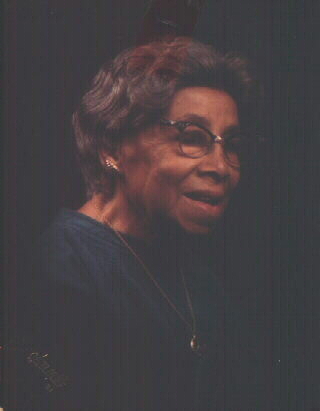
   Septima Poinsette Clark was born in 1898 and died in 1987.  A teacher and an organizer, she was another key person in the civil rights movement who is little known to the general public.  She taught African Americans citizenship and writing so they could become voting members of society.  She struggled mightily just for her own education, and then later to educate others.  She is known for teaching other civil rights leaders to respect the ordinary people they encountered every day in the struggle.  What was good enough for them had to be good for the people [oh how we need this today!!].


   Here is what the mother of the civil rights movement [Rosa Parks] had to say about Septima Clark:
"Rosa Parks, who has been called the Mother of the Civil Rights Movement, well remembers the first time she met Septima Clark.

It was at a civil rights workshop in Tennessee in the summer of 1955. African-Americans and sympathetic whites had begun to meet quietly, secretly, throughout the South to plan their counterattacks against the segregation system, and to train the new corps of volunteers for that fight. These volunteers would come to be called civil rights workers. Septima Clark, already a 30-year veteran of her people's struggle, was one of the trainers.

   "At that time I was very nervous, very troubled in my mind about the events that were occurring in Montgomery," Rosa Parks says. "But then I had the chance to work with Septima. She was such a calm and dedicated person in the midst of all that danger. I thought, 'If I could only catch some of her spirit.' I wanted to have the courage to accomplish the kinds of things that she had been doing for years." After the sessions with Clark, Parks returned to Montgomery saying she had a firmness and self-confidence she had not felt before. Three months later she refused to give up her seat on a bus so that a white person could sit down, the act which marks the beginning of the modern civil rights movement."

   "She was born in Charleston, South Carolina, in 1898, and until the end of her life you could tell it from her accent; never loud...always patient and firm. Single mother, public school teacher, quietly devout Christian, she began organizing anti-racist activities in the Deep South in the 1920's. She stuck through the Movement in its most difficult moments: dark nights of fear on lonely back highways...the bombing and burning of churches and meeting halls...the beatings and murders of friends and co-workers. She volunteered to work in the most dangerous spots, surviving jail and two heart attacks in the process. And she lived to witness the Movement's greatest triumphs: the end of segregated public facilities...the passage of the great civil rights legislation of the 1960's...the election of African-American public officials in the South for the first time in a hundred years."

   "This remarkable woman accomplished a lot during her lifetime. Although her principal and teachers recommended that she go to college when she was 18, her parents did not have the means to send her. However, she was determined to get a college education.

   "In 1930, at the age of 32, Septima Clark began taking summer classes at Columbia University in New York City. She began these classes primarily because she felt she was not getting the results she expected from the children she was teaching in South Carolina. Seven years later she continued at Atlanta University in Georgia where she took more courses, including one taught by W.E.B. DuBois. She persevered in her pursuit of her Bachelor's degree and finally in 1942 was awarded her degree from Benedict College. She did not stop there, however, and three years later she went on to receive a Master's degree from Hampton Institute --- at the age of 47."  (www.sistermentors.org)  

"Shortly before she sent Rosa Parks back to Montgomery and into the history books, Septima had been fired from her job with the South Carolina public schools when she refused to quit the local chapter of the NAACP. She had been an NAACP member since 1919, almost from the date of its inception.
   "At the age of 58 and following 40 years as a public school teacher, the thought of retirement simply never seems to have entered her mind. She took a job as Director of Education at the Highlander Center in Tennessee, which had long been active in the Southern struggles for unionization and racial equality. The Center was often accused by Southern segregationists of being run by Communists.
   "Septima discounted the red-baiting, saying "that was the general feeling you got in those days whenever the races mixed." Still, becoming a full-time civil rights worker was an immense leap in the dark for her. "For three long months I couldn't sleep," she recalled about the period following her arrival at Highlander. "Then at the end of that time it seemed to me as if my mind cleared up, and I decided then that I must have been right."


   "An army of civil rights workers spread out across South, sitting in at lunch counters, marching in the face of police dogs and riot sticks, registering the disenfranchised. They were volatile, volcanic meteors that streaked across the Southern skies and changed a way of life forever. Some saw their contribution in thundering, inspirational speeches...some were quiet pilgrims making witness to their faiths in jail cells. Septima, the lifelong teacher, figured she'd set up a few schools to show her people how to take advantage of the new rights that were being opened up to them.

"I just tried to create a little chaos," Septima said, explaining her role. "Chaos is a good thing. God created the whole world out of it. Change is what comes of it."

   "One area that needed changing most was the area of voting rights for African-Americans in the South. Legally, Black Southerners had the right to vote. However, most were kept from the polls by the various state "literacy tests." Prospective voters were asked to read and then "interpret" a section of the state or national constitutions. The products of inferior, segregated school systems, many adult Blacks could barely read or write their own names. Most did not even bother to try to register.

   "First through the Highlander Center and later through Martin Luther King's Southern Christian Leadership Conference, Septima organized a series of citizenship schools across the South to train local leaders in such skills as how to teach reading and writing and how to pass the literacy tests. The results were revolutionary.

"One of the fellows we were teaching in Alabama went up to the bank in his little home town to cash a check," Septima said. "The white man took out his pen and said, 'I'll make the X.' And the Black fellow said, 'You don't have to make the X for me, because I can write my own name.' The white guy says, 'My God, them niggers done learned to write!'

"At the time, people thought I had new-fangled ideas, but I guess those new-fangled ideas worked out, didn't they?"

   Septima Poinsette Clark left a deep impression on all that knew her. She was a gracious and excellent teacher, mentor, civil rights worker.  There would likely have been a less successful movement if she had not been part of it.     
[My thanks to J. Douglas Allen-Taylor for his excellent article about Septima Clark.  It should be published!!!]


Biography.com -- http://www.biography.com/people/septima-poinsette-clark-38174 
Black past - http://www.blackpast.org/aah/clark-septima-poinsette-1898-1987 
African American Registry - http://www.aaregistry.org/historic_events/view/septima-p-clark-south-carolina-educator-and-civil-rights-activist 
Encyclopedia Britannica - http://www.britannica.com/biography/Septima-Poinsette-Clark 
North Carolina Humanities Council - http://nchumanities.org/programs/road-scholars/septima-clark-citizenship-education-and-women-civil-rights-movement 
Unpublished article by Douglas Allen Taylor - http://www.safero.org/articles/septima.html 
MLKing Encyclopedia - http://kingencyclopedia.stanford.edu/encyclopedia/encyclopedia/enc_clark_septima_1898_1987/   
Sister Mentors -- http://www.sistermentors.org/dcmarch03.htm