Showing posts with label Charlotta Bass. Show all posts

Friday, February 24, 2017

FEBRUARY IS AFRICAN AMERICAN HISTORY MONTH: CHARLOTTA BASS AND THELMA DALE PERKINS


CHARLOTTA BASS AND THELMA DALE PERKINS


Thelma Dale Perkins

   Continuing my favorite month (my birthday month) I want to share a bit about the lives of two unknowns, Charlotta Bass and Thelma Dale Perkins.  In particular, the latter was a quiet presence in the history of the struggle for civil rights and women's rights and more.  I want to state at the beginning that I know about both of them because my father worked with them, and I believe they shared mutual respect.  I know he held them both in high regard.

   Charlotta Bass  - perhaps the best photo of her is this one:


   She was the first African American woman to own a newspaper in Los Angeles. She ran for Vice President on the Progressive Party ticket.  She was courageous, outspoken, and so much more.  My father wrote speeches for her and accompanied her around the United States as she stumped for office.   Charlotta Bass 1874 - 1969 published The California Eagle from 1912 to 1951.  "She and her husband Joseph Bass, who had served as editor of the Topeka Plain Dealer and the Montana Plain Dealer used The Eagle to push for reforms. They combatted such issues as the derogatory images rampant in D.W. Griffith's film, Birth of A Nation; Los Angeles' discriminatory hiring practices; the Klu Klux Klan; police brutality; and restrictive housing covenants.  

"Bass' uncompromising stance against racial injustice resulted in her life being threatened on numerous occasions. She was branded a communist, and the FBI placed her under surveillance on the charge that her paper was seditious. However, this never deterred her or her paper from seeking civil and political rights for African Americans and the disadvantaged.

"Bass retired from the newspaper business in 1951. Her later years were devoted to politics. In 1952 she became the first African-American woman to run for national office as the Vice Presidential candidate on the Progressive Party ticket.

"She died of a cerebral hemorrhage on April 12,1969."
 

Charlotta Bass conducts a meeting in Pasadena, CA.

   Thelma Dale Perkins - luckily I devoted an entire blog to her last year:  http://turtlelearning.blogspot.com/2016/02/february-is-african-american-history_7.html 
I met Thelma Dale Perkins a few times when she came to visit my parents in Los Angeles. Such a gracious and lovely person, I knew there was something special about her besides just her friendship with my parents. My plan was to try to visit her in North Carolina where she had retired but I never made it. She died in 2014 and I feared I would never learn her true history. I knew snippets - that she was a friend of WEB DuBois; that she was a feminist activist in New York City. But not much more.
Here is one site that talks about her "civic engagement" - and I am indebted to them for writing this although it gives an entirely one-sided picture of this dynamic and energetic fighter for the rights of African Americans, especially women.

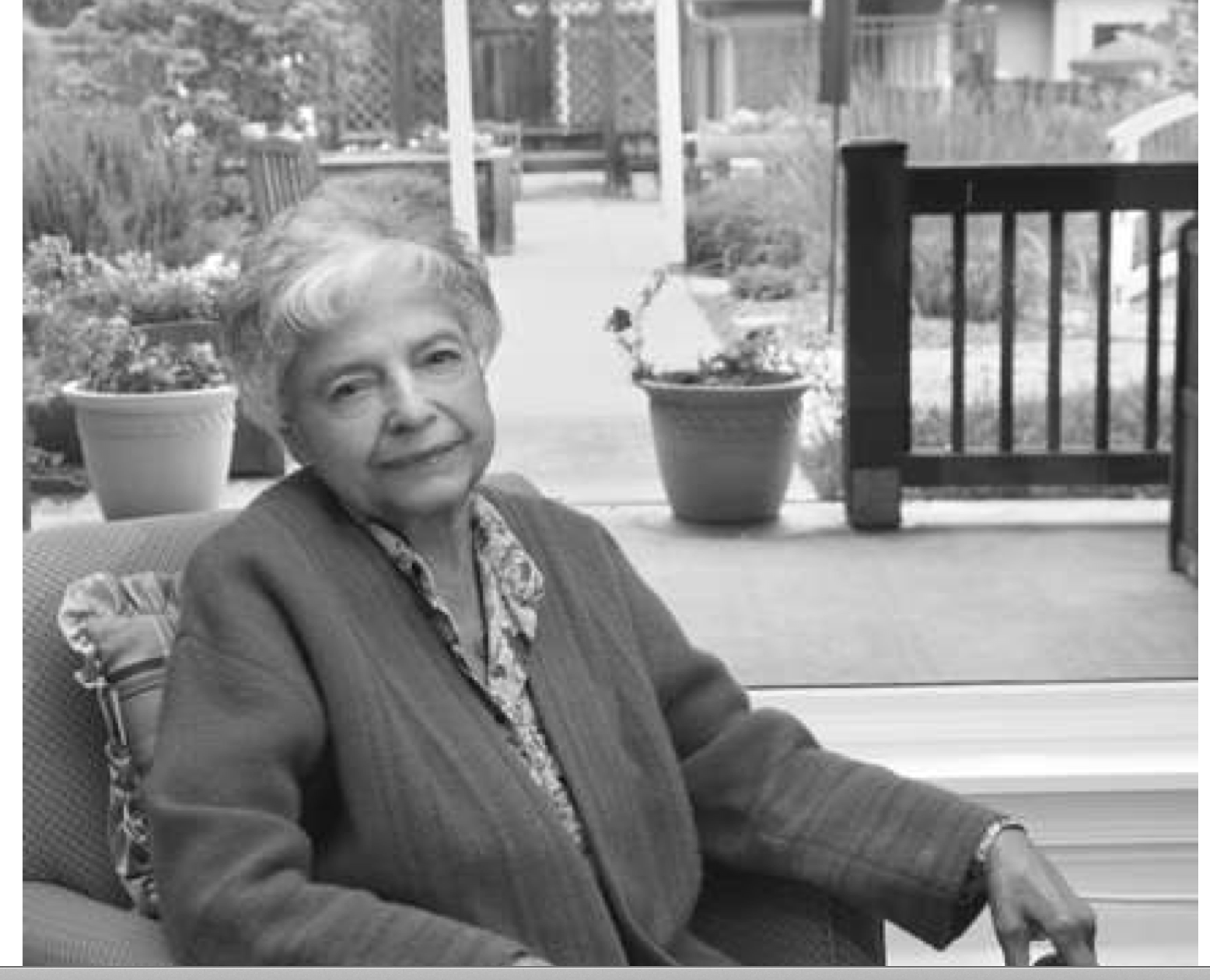


   "Thelma Perkins was born Thelma Dale on October 23, 1915, in the Historic Anacostia district of Washington, D.C. The youngest of four children, Thelma is directly related to the most prominent African American families in the Nation’s capital during the Reconstruction era. Her uncle, Dr.
Frederick Patterson served as President and President Emeritus of the Tuskegee Institute for more than fifty years. He was also awarded the Medal of Freedom in 1987.
   "Education was very important in Thelma’s family and her parents encouraged her studies. She attended Paul Laurence Dunbar High School, a college-prep high school for African American students. In 1932, like her grandfather before her, Thelma entered Howard University where she studied teaching and social work. After graduating in 1936 she stayed at Howard to conduct graduate work in Sociology under prominent sociologist Dr. E. Franklin Frasier, concentrating on the living conditions of African American families in Washington, D.C.
   "Inspired by her father’s example, Thelma began taking active roles in volunteer and civic organizations while she was in college. She was a member of Alpha Kappa Alpha, one of the first African American sororities in the United States. Thelma was also involved in the Liberal Club, a vocal campus group that advocated for the integration of African Americans. Integration continued to be an important cause for Thelma and in the 1940s she accepted the position of acting Secretary of the National Negro Congress. During that time, Thelma assisted with early civil rights activities and formed lifelong friendships with such luminaries as Paul Robeson and Dr. W.E.B. DuBois." 

   For more information, please read my blog linked above, about this fighter for her people, and especially the female members.  My hope is that with further research and spreading the word on social media, Thelma Dale Perkins and Charlotta Bass will not remain confined to the dustbins of history.


REFERENCES:
Charlotta Bass - http://www.pbs.org/blackpress/news_bios/bass.html 

Bass, Charlotta. Forty Years: Memoirs from the Pages of A Newspaper: 1960. (Unpublished Manuscript Available at Southern California Research Library and Schomburg)  www.socallib.org/bass/ondex.html.#sthash.0felxqco.dpuf  

Jeter, James Phillip, Ph.D. Rough Flying: The California Eagle - (1879-1965) (AJHA Convention Paper)

Streitmatter, Rodger. Raising Her Voice: African American Women Journalists Who Changed History. Kentucky: The University Press of Kentucky, 1994.


Radicalism at the Crossroads: African American Women Activists in the Cold War by Dayo F. Gore - https://www.h-net.org/reviews/showrev.php?id=32622 
 
A pdf of her history - http://www.chapelhillhistoricalsociety.org/en/2011/pdf/thelma_perkins_2012.
Excerpt from a book - https://books.google.com/books?id=dYKN7GnhruEC&pg=PA52&hl=en#v=onepage&q&f=false De-Centering Cold War History: Local and Global Change edited by Jadwiga E. Pieper Mooney, Fabio Lanza. Chapter 3. 

Thursday, February 16, 2017

FEBRUARY IS BLACK HISTORY MONTH - SHIRLEY GRAHAM DUBOIS AND ESLANDA GOODE ROBESON


[note: every image I searched for Black History or African American History Month never included Paul Robeson - and I find that highly disturbing.]

I always wondered why February was African American History month? why the shortest month? It is also the month for many wonderful things such as:  [a list from National Day Calendar]
And today I learned that February 16th is WORLD READ ALOUD DAY
  

   Last year at this time I devoted myself to profiling some wonderful African Americans for African American or Black History Month.  This I did pretty faithfully every day until I learned I had to go in for surgery and experience the unfortunate occurrence of having two kinds of cancer discovered in my female organs (and more).
   My blogs were a labor of love.  There are so many fine African Americans who are not even known to people in this country -- I could've kept writing every day to profile more.
   Well, this time I have decided to stick to some of the more obscure people who need to be taught to students -- under the heading of Ethnic Studies perhaps -- but really, as part of their learning about the history of the United States.  Why I wonder every time is this a separate celebration? Obviously because it would not be observed at all if there weren't a special month set aside.


   HAVE YOU EVER HEARD OF ESLANDA ROBESON?   SHIRLEY GRAHAM DUBOIS?  CHARLOTTA BASS?     THELMA DALE PERKINS?     ALICE DUNBAR (PAUL LAURENCE DUNBAR'S WIFE)?       ELIZABETH CATLETT ?    OCTAVIA BUTLER?


   Let's start with Shirley Graham DuBois, a prolific writer, singer, composer and more and who wrote a wonderful book called There Was Once A Slave about the life of Frederick Douglass.   I own a copy of the 1947 book published by Julian Messner, a first edition I believe.   I will quote from the back of the jacket cover about Shirley Graham (as she is called at the time of this edition):  
   "Shirley Graham brought to her research and study a youthful admiration for Douglass.  When she as a child, her father used to tell her stories of how Douglass visited the old Wayne County farmhouse where Miss Graham was born.  The farmhouse had been purchased by her great-great-grandfather long before the Civil War after he had been freed from slavery, and it subsequently became a station in the underground railway.  Frederick Douglass had been a frequent visitor during her father's childhood.
   "Miss Graham is a graduate of Oberlin College where she also took her Master's Degree.  She studied at the Sorbonne in Paris and later after receiving a Julius Rosenwald Foundation Fellowship for creative writing, she studied at the Yale School of Drama.  Miss Graham supervised the Chicago Federal Unit that brought the Swing Mikado to Broadway and designed and wrote the music for the popular and highly praised children's production, Little Black Sambo.  She is the author of Dr. George Washington Carver, Scientist and, Paul Robeson: Citizen of the World, both biographies for young people.
   "There Was Once A Slave, The Heroic Story of Frederick Douglass is her first book for adult readers and was selected from over six hundred manuscripts submitted in the Contest. The judges were Carl Van Doren, Lewis Gannett, and Clifton Fadiman."
   "The Julian Messner Award for the Best Book Combating Intolerance in America was augmented by the Lionel Judah Tachna Foundation to $6500.00 -- $5000.00 outright and $1500.00 against royalties.  The Foundation was established by Max Tachna in memory of his son lost during the Battle of the Coral Sea when the USS Sims went down."
   Shirley Graham married W.E.B. DuBois in 1951 after the death of his first wife. Graham-DuBois career didn't stop, even after the move to Ghana, and later to Cairo when the President of Ghana Nkrumah was overthrown. For further biographical information, see Gerald Horne, Race Woman: The Lives of Shirley Graham Du Bois (2000)

   [A blog titled "9 Influential Women in Black History You Won't Hear About In School"  https://mic.com/articles/110702/9-influential-women-in-black-history-you-won-t-hear-about-in-school#.LdqJvpwuD   includes Fannie Lou Hamer, Marsha P. Johnson, Madam C.J. Walker, Mary McLeod Bethune, Ruby Bridges, Dorothy Height, Audre Lorde, Ella Baker, and Shirley Chisholm.  This is a great list and I will include some of them here.]


   Eslanda Goode Robeson is even less well known than Shirley Graham DuBois, just as Paul Robeson is left off displays of great African Americans for Black History Month.  Here's a teaser from the book by Dr. Barbara Ransby, PhD:  "Eslanda: The Large and Unconventional Life of Mrs. Paul Robeson (Yale University Press, January 8, 2013) is a deeply researched biography that chronicles an amazing life set against the backdrop of some of the most pivotal events of the twentieth century: the Great Depression and the rise of fascism; the anti-colonial struggles in Africa, Asia and the Caribbean; World War II and the founding of the United Nations: the Chinese revolution; the anti-communist witch hunts of the 1950s; and the rise of the U.S. Civil Rights and Black Power movements. Eslanda (Essie) Robeson traveled to every corner of the globe and witnessed history in the making, a history she wrote about and spoke about.
"Her friends and associates included heads of state, world-renowned artists and writers, and revolutionaries. Her career and commitments took her many places: colonial Africa in 1936, the front lines of the Spanish Civil War, the founding meeting of the United Nations, Nazi-occupied Berlin, Stalin’s Russia, and China two months after Mao’s revolution. She studied with Bronislaw Malinowski, vacationed with Nikita Khrushchev, befriended Jawaharlal Nehru, interviewed Mahatma Gandhi, danced with Eugene O’Neill, flirted with Marcel Duchamp, dined with Noel Coward and maintained deep and complicated friendships with Vijaya Pandit, Emma Goldman, Jomo Kenyatta, W.E.B. and Shirley DuBois, Langston Hughes, and Kwame Nkrumah. She was a woman of unusual accomplishment—an anthropologist, a prolific journalist, a tireless advocate of women’s rights, an outspoken anti-colonial and antiracist activist, and an internationally sought-after speaker.
"Yet historians, for the most part, have confined Essie to the role of Mrs. Paul Robeson, a wife hidden in the large shadow cast by her famous husband. This book, by award-winning biographer, Barbara Ransby (author of Ella Baker and the Black Freedom Movement) changes all that. Essie Robeson’s story is told for the first time in all of its complexity and in the context of the dynamic historical times in which she lived."


   My family pride includes my father's friendship with both W.E.B. Du Bois and Paul Robeson.  I was concerned that my father may not have given their wives their due. But then I found among my parents' books a copy of Eslanda Robeson's book African Journey - which is signed to my father - in a very loving way. "For Charlie Kramer with thanks for so cheerfully accepting me  as one of the gang.  Gratefully Eslanda Goode Robeson  May 1949" 


   I realize that my study into not so well known African Americans also has a great deal to do with books. Both these wonderful women were authors, as well as so much more.  I will continue to write about more African American women later this month.

REFERENCES
World Read Aloud Day - http://www.jumpintoabook.com/2017/02/world-read-aloud-day-february-16-2017-lets-celebrate/  

African American History Month - http://www.africanamericanhistorymonth.gov 

Biographies - https://www.who2.com/list/black-history-month-biographies/ 

Shirley Graham DuBois - http://scua.library.umass.edu/duboisopedia/doku.php?id=about:du_bois_shirley_graham 
Papers, Shirley Graham DuBois 1896-1977 - http://oasis.lib.harvard.edu/oasis/deliver/~sch00211 

Eslanda Goode Robeson profiled on Democracy Now - https://www.democracynow.org/2013/2/12/remembering_the_overlooked_life_eslanda_robeson 

Dr. Barbara Ransby on Eslanda Good Robeson - http://barbararansby.com/eslanda/ 

Monday, February 1, 2016

February is African American History Month - Charlotta Bass

UNKNOWN HEROES OF OUR HISTORY.
   I wanted to post a hero a day for African American History Month.  February, the shortest month, my birthday month, and the coldest month where I live, seems highly inappropriate as the month for Black History. We can credit Carter G. Woodson with the establishment of this important month. But of course I believe that every month should be African American History month.
Today I want to present CHARLOTTA BASS who was the first Black woman owner and editor of a newspaper in Los Angeles - The California Eagle - and also ran for VP with Henry Wallace and the Progressive Party.  The best collection of her papers is at the Southern California Library for Social Research. You can visit there and read her papers.  Or a wonderful digital collection of photos is housed at USC.
   My father was a speechwriter for the Progressive Party. He worked with the greats - WEB DuBois and Paul Robeson for starters. But he also accompanied Mrs. Bass around the country as she spoke at various locations for her election.  While the Progressive Party is given short shrift in the history books, they actually did well for a party with little money and functioning during the burgeoning anti-communist hysteria of the 1950s.  
   Charlotta Bass was a formidable foe against all that formed to keep African Americans down. She represented one who welcomed challenges and fought at every turn. Here's a photo that I love of her and Paul Robeson.
Imagine being in the forefront of the struggle for civil rights and economic equality at a time when your rights as a human being were not generally recognized by the majority.  
Here's a fair account of her history from PBS which mentions her fight against DW Griffith's Birth of a Nation - a heinous crime which we are still fighting against to this day.  USC in fact names its film school for DW Griffith and one of our local middle schools still has his name.       I quote from the PBS history:   "Bass' uncompromising stance against racial injustice resulted in her life being threatened on numerous occasions. She was branded a communist, and the FBI placed her under surveillance on the charge that her paper was seditious. However, this never deterred her or her paper from seeking civil and political rights for African Americans and the disadvantaged.
Bass retired from the newspaper business in 1951. Her later years were devoted to politics. In 1952 she became the first African-American woman to run for national office as the Vice Presidential candidate on the Progressive Party ticket."
   There is so much more to be said about Charlotta Bass.  Meanwhile, I hope this snippet of history contributes to African American history month and to the knowledge of those in the struggle for civil rights.  Here are some links for more on this great history:
http://www.africanamericanhistorymonth.gov 
http://www.history.com/topics/black-history/black-history-month 
http://www.africanamericanhistorymonth.gov/about.html